
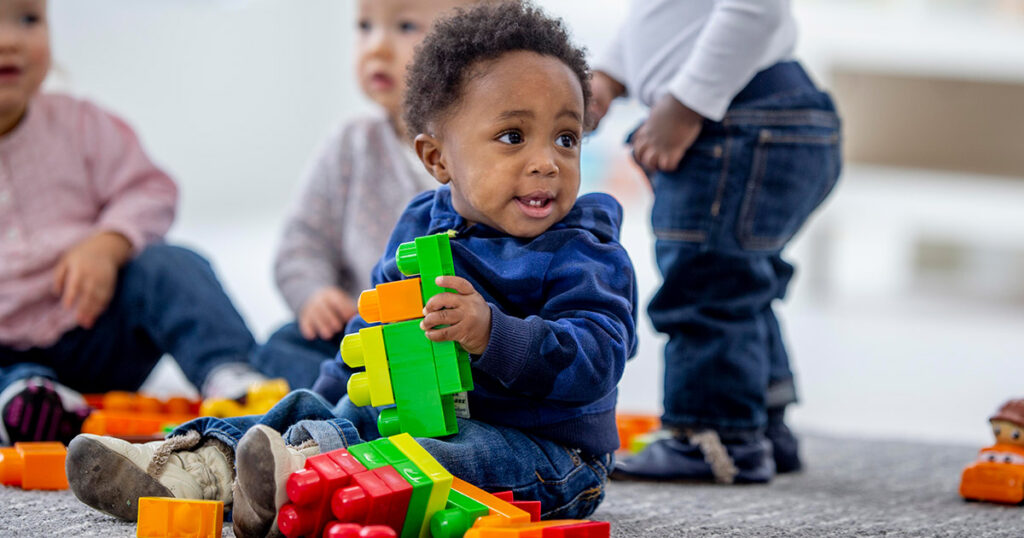
Toddlers are natural scientists—constantly experimenting, exploring, and asking (endless!) questions. From stacking blocks to solving puzzles to asking “Why?” 50 times before breakfast, every interaction is helping your child’s brain grow. Welcome to the world of cognitive development—a fancy way of saying “how kids think, learn, and understand.”
This guide is packed with fun, evidence-based activities to spark curiosity, build memory, develop problem-solving skills, and encourage focus—all while keeping things playful and pressure-free.
What Is Cognitive Development?
Cognitive development refers to how your child learns to think, explore, and figure things out. It includes skills like:
- Memory
- Cause and effect
- Sorting and classifying
- Attention and focus
- Imitation and pretend play
- Language and problem-solving
According to Jean Piaget’s theory of cognitive development, toddlers are in the preoperational stage—meaning they’re starting to use symbols, language, and imagination to make sense of the world (Piaget, 1952).
Playful Activities That Build Brain Power
1. Stacking and Sorting Games
- Use blocks, cups, or containers to build towers.
- Sort objects by color, shape, or size (think: socks, buttons, or cereal).
2. Simple Puzzles and Matching Games
- Try two- or three-piece puzzles.
- Use animal flashcards and ask, “Can you find the other lion?”
3. Pretend Play
- Dress up as firefighters, chefs, or doctors.
- Set up a pretend store or kitchen. Pretend play boosts memory, planning, and flexible thinking.
4. Read and Re-Read Books
- Repetition helps memory and word recognition.
- Ask questions like, “What do you think will happen next?”
5. Water and Sand Play
- Fill cups, pour, scoop, and measure.
- Great for cause-and-effect learning and concentration.
6. Memory Games
- Start with 2–3 simple picture cards and ask your child to find a match.
- Try “What’s missing?” by removing an item from a group and asking what’s gone.
7. Sing Songs with Motions
- Try classics like “Itsy Bitsy Spider” or “Head, Shoulders, Knees, and Toes.”
- Combines memory, rhythm, and sequencing.
Do’s and Don’ts for Supporting Cognitive Development
Do:
- Let your child lead: Follow their curiosity.
- Repeat activities: Toddlers learn best through repetition.
- Encourage questions: Even if you don’t always have the answers.
- Play alongside: Your presence builds confidence and attention span.
- Celebrate effort: “You worked so hard on that puzzle!”
Don’t:
- Don’t rush to correct: Let them try and fail safely.
- Don’t overload: Simple, short activities work best.
- Don’t compare: Every child develops at their own pace.
Video Resources:
English:
Spanish:
Local Resources in Westchester & Putnam
- Westchester Children’s Museum
https://www.discoverwcm.org
Interactive exhibits that support problem-solving, creativity, and discovery. - Putnam/Northern Westchester BOCES – Early Childhood Education
https://pnwboces.org
Programs for early learners and workshops for parents. - Westchester Library System – Early Literacy and Play
https://www.westchesterlibraries.org
Free storytimes, STEM kits, and parenting programs. - WJCS Parent-Child Home Program
https://www.wjcs.com
Home-based cognitive and language development support for toddlers.
Final Thoughts
Your toddler doesn’t need fancy toys or academic drills to grow their brain—just a curious spirit, time to play, and a loving guide (that’s you!). Through everyday activities, you’re building the foundation for lifelong learning. One game of peek-a-boo at a time.
Bibliography and Further Reading
- Piaget, J. (1952). The Origins of Intelligence in Children. International Universities Press.
- Center on the Developing Child at Harvard University. (2022). Executive Function Activities for 3-Year-Olds. https://developingchild.harvard.edu
- American Academy of Pediatrics. (2021). Child Development: Cognitive Milestones. https://www.healthychildren.org
- Ginsburg, K. R. (2007). The importance of play in promoting healthy child development and maintaining strong parent-child bonds. Pediatrics, 119(1), 182-191.
Legal Disclaimer: The information provided by our nonprofit is for informational purposes only and not a substitute for professional medical advice, diagnosis, or treatment. Always consult a qualified healthcare provider for medical concerns. We make no guarantees about the accuracy or completeness of the information and are not liable for any decisions made based on it. If you have a medical emergency, call 911 or seek immediate medical care.