
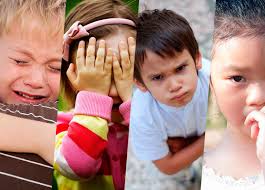
By age 3, children aren’t just feeling happy, mad, or sad—they’re starting to experience mixed, intense, and sometimes confusing emotions like frustration, embarrassment, pride, disappointment, or fear. What they don’t yet have is the language or regulation tools to manage them.
That’s why a spilled snack can cause a meltdown. Or why your child goes from joyful to furious in five seconds flat. It’s not manipulation—it’s development in progress.
Helping a 3-year-old navigate these bigger emotional waves is one of the most important things you can do as a caregiver. It builds trust, resilience, and lifelong emotional intelligence.
What’s Happening Emotionally at Age 3?
Three-year-olds are developing:
- A broader emotional vocabulary
- The ability to feel two emotions at once (e.g., nervous and excited)
- Increased awareness of other people’s feelings (empathy)
- Stronger—but still immature—self-control skills
But here’s the catch: the part of the brain responsible for emotional regulation (the prefrontal cortex) is still under construction. That’s why regulation is a learned skill—not something toddlers can just “figure out.”
Strategies to Support Emotional Growth
1. Name and Validate the Emotion
Before problem-solving, focus on recognition:
“It looks like you’re really disappointed. That’s a hard feeling.”
“You’re mad because I said no. It’s okay to feel mad.”
Validation helps your child feel heard—even if you’re holding a limit.
2. Use Visuals and Books
Children learn emotions better with pictures, faces, and characters. Try:
- Emotion flashcards
- Drawing faces with different feelings
- Books like The Color Monster or Glad Monster, Sad Monster
3. Model Calm Responses
Your child learns how to handle frustration by watching how you handle yours.
- Narrate your own feelings in calm moments: “I’m feeling a little overwhelmed, so I’m going to take a breath.”
- Avoid yelling when possible (we’re all human—but repair if you do).
4. Create a Calm-Down Routine
Instead of using punishment, teach tools for emotional regulation:
- Deep breathing
- Counting to 10
- Hugging a stuffed animal
- Going to a cozy corner
Make a calm-down kit with comforting items your child can choose from when upset.
5. Practice Through Play
Pretend play, puppets, and stories are perfect for acting out emotions in a safe space.
“What do you think the bear is feeling? What could he do to feel better?”
Dos and Don’ts for Supporting Emotional Regulation
| Do | Don’t |
|---|---|
| Name emotions and help your child label them | Dismiss feelings (“You’re fine!” or “Stop crying”) |
| Set limits with empathy | Yell, shame, or punish emotional expression |
| Model your own regulation strategies | Expect a 3-year-old to “calm down” on command |
| Offer comfort and a safe space | Threaten or isolate during meltdowns |
| Read books and use visuals to teach feelings | Overload your child with lectures in the moment |
When to Seek Extra Support
Reach out to a pediatrician, behavioral specialist, or child therapist if your child:
- Has intense tantrums lasting over 20–30 minutes frequently
- Hurts themselves or others when upset
- Struggles to return to baseline after getting overwhelmed
- Shows limited emotional range or flat affect
- Doesn’t respond to calming tools over time
Early intervention is incredibly effective at this stage.
Video Resoruces:
English:
Spanish:
Local Resources for Emotional Development Support
- Westchester Jewish Community Services (WJCS) – Offers play therapy, family counseling, and SEL-based programs
www.wjcs.com | (914) 761-0600 - Westchester Institute for Human Development (WIHD) – Behavioral health screenings, parent coaching, early intervention
www.wihd.org | (914) 493-8150 - The Guidance Center of Westchester – Mental health support for toddlers and families
www.theguidancecenter.org | (914) 613-0700
Bibliography and Sources
- Zero to Three – “Helping Toddlers Manage Their Emotions”
https://www.zerotothree.org/resource/helping-toddlers-manage-their-emotions/ - American Academy of Pediatrics (AAP) – “Understanding Temperament and Emotion Regulation”
https://www.healthychildren.org - Harvard Center on the Developing Child – “Self-Regulation: A Foundation Skill”
https://developingchild.harvard.edu - Child Mind Institute – “How to Help Kids Handle Big Emotions”
https://childmind.org/article/helping-children-deal-with-big-emotions/ - CSEFEL (Vanderbilt University) – “Teaching Children About Feelings”
http://csefel.vanderbilt.edu
Legal Disclaimer: The information provided by our nonprofit is for informational purposes only and not a substitute for professional medical advice, diagnosis, or treatment. Always consult a qualified healthcare provider for medical concerns. We make no guarantees about the accuracy or completeness of the information and are not liable for any decisions made based on it. If you have a medical emergency, call 911 or seek immediate medical care.