
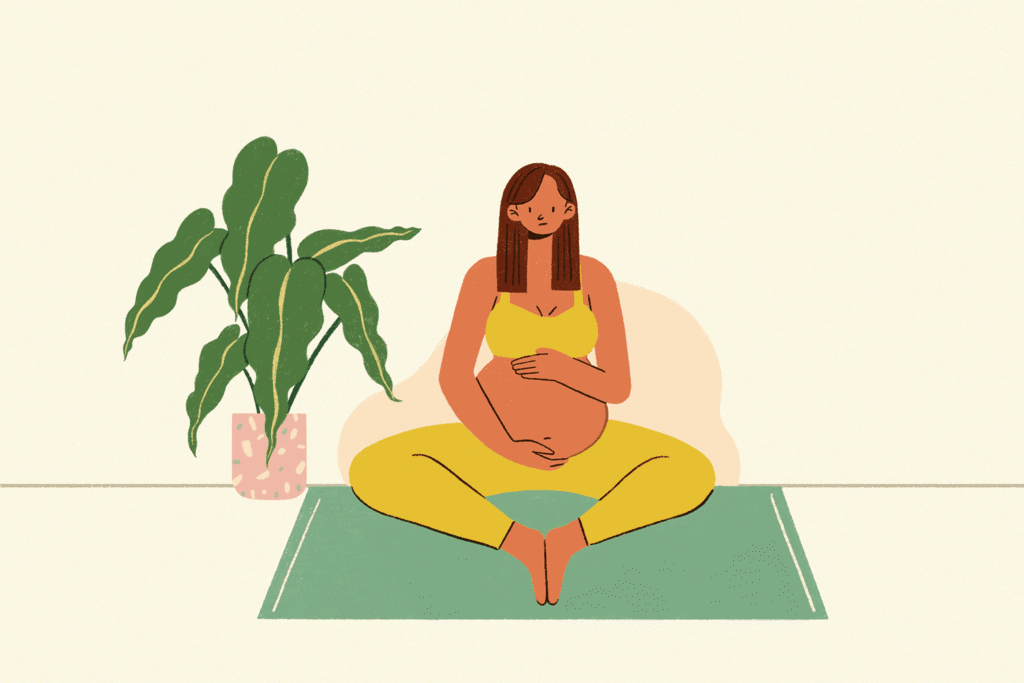
Pregnancy is a time of profound change—physically, mentally, and emotionally. Gentle movement like prenatal yoga isn’t just safe; it carries significant benefits for both you and your baby. Here’s an evidence-based look at why it matters and how to incorporate it into your daily routine.
1. Mental Well-being & Stress Reduction
Why it matters: Pregnancy can bring heightened anxiety, mood swings, and even depression.
What the research shows:
- A review of clinical studies found that prenatal yoga significantly reduces anxiety, stress, and depression, while improving sleep quality and emotional balance self.com+4parents.com+4onepeloton.com+4.
- A University of Michigan study noted reductions in cortisol (stress hormone) and increases in markers of immune function in yogic prenatal participants sciencenews.org.
How to practice:
- Include 5–10 minutes of gentle breathwork and mindful movement each day.
- Focus on Cat–Cow sequences or seated deep breathing—choose positions that feel calming.
- Let your breath guide your movement to help release tension.
2. Physical Comfort & Pain Relief
Why it matters: As your body adapts to pregnancy, lower back pain, swollen joints, and tight hips often arise.
Evidence-based benefits:
- Prenatal yoga provides relief from back and hip pain, improves circulation, and reduces nausea and headaches self.com.
- One study showed shorter labor duration and reduced pain for participants who practiced yoga regularly timesofindia.indiatimes.com+14sciencedirect.com+14scholarworks.gvsu.edu+14.
Home practice tips:
- Try Bound Angle Pose (Baddha Konasana) with pillows under your knees to ease hip tension youtube.com+8yogarenewteachertraining.com+8onepeloton.com+8.
- Use Tabletop hip circles to release tightness in the pelvis.
- In later stages, practice simple Goddess squats to support balance and pelvic openness nourishmovelove.com+1pubmed.ncbi.nlm.nih.gov+1.
3. Preparation for Labor and Delivery
Why it matters: Pregnancy demands stamina, flexibility, and pelvic opening.
Scientific insights:
- Prenatal yoga improves maternal confidence, birth preparedness, and coping skills during labor self.com+3sciencedirect.com+3pmc.ncbi.nlm.nih.gov+3.
- Certain practices contribute to healthier birth outcomes: fewer inductions, reduced preterm birth risk, and optimized fetal positioning .
At-home guidance:
- Incorporate hip-openers such as wide-leg Goddess poses and Squats.
- Practice pelvic floor engagement and release during each exhale.
- Try supported back-bends or side-lying Savasana for relaxation with comfort youtube.com+12onepeloton.com+12xeroshoes.com+12.
4. Emotional Bonding & Mind–Body Connection
Why it matters: Yoga helps you tune into your body, your breath, and your baby.
What women report:
- Pregnant participants describe prenatal yoga as bringing balance, autonomy, connection, and a sense of preparedness .
- Many say it enhances their emotional bond with the baby and creates a mindful, protective space .
How to connect at home:
- Take moments of silence each session to focus on baby’s movements.
- Incorporate gentle affirmations or mantras with breath, like “I am preparing, I am strong.”
- Pair movement with intention—imagine creating space for your growing baby.
5. Safe Prenatal Yoga at Home — Guide by Trimester
First Trimester
- Focus on gentle stretching and breathing. Avoid overheating .
Second Trimester
- Begin to include standing hip openers, supported back-bends, and lateral stretches, using props like blocks and bolsters scholarworks.gvsu.edu+15onepeloton.com+15xeroshoes.com+15.
Third Trimester
- Prioritize balance, comfort, and pelvic preparation. Use side-lying or supported Savasana instead of lying flat m.youtube.com+15onepeloton.com+15researchgate.net+15.
Sample Home Routine (15 Minutes)
- Begin seated or in Tabletop: 2 minutes of deep belly breathing
- Cat–Cow flow: 1 minute to mobilize spine
- Hip circles: 1 minute each side
- Bound Angle Pose with support: 2 minutes
- Goddess squat or chair pose with block: 1 minute
- Supported Side-Lying Savasana with bolster: 5 minutes
- Simple seated breathing or closing gratitude moment: 2 minutes
Adjust as needed—this is meant to be gentle and supportive, not strenuous.
Video Resources:
English:
Spanish:
Local Westchester Resources
- Full Circle Women’s Health (White Plains) – Prenatal yoga & holistic care
Phone: (914) 421-1500
Website: fullcirclewomenshealth.com - Westchester Yoga Arts (New Rochelle) – In-person and online prenatal classes
Phone: (914) 632-1101
Website: westchesteryogaarts.com
Bibliography:
American College of Obstetricians and Gynecologists (ACOG). (2020). Physical Activity and Exercise During Pregnancy and the Postpartum Period (Committee Opinion No. 804).
Retrieved from: https://www.acog.org/clinical/clinical-guidance/committee-opinion/articles/2020/04/physical-activity-and-exercise-during-pregnancy-and-the-postpartum-period
Field, T. (2011). Yoga clinical research review. Complementary Therapies in Clinical Practice, 17(1), 1–8.
DOI: 10.1016/j.ctcp.2010.09.007
Sun, Y., Wang, F., & Huang, X. (2022). The effects of prenatal yoga on labor pain and delivery outcomes: A systematic review and meta-analysis. Journal of Maternal-Fetal & Neonatal Medicine, 35(25), 4857–4865.
DOI: 10.1080/14767058.2021.1941850
Satyapriya, M., Nagarathna, R., Padmalatha, V., & Nagendra, H. R. (2009). Effect of integrated yoga on anxiety, depression, and well-being in normal pregnancy. Complementary Therapies in Clinical Practice, 15(2), 105–113.
DOI: 10.1016/j.ctcp.2009.02.005
Babbar, S., Shyken, J. M., & Aagaard, K. (2021). Yoga during pregnancy: A review. American Journal of Obstetrics & Gynecology MFM, 3(2), 100211.
DOI: 10.1016/j.ajogmf.2021.100211
National Center for Complementary and Integrative Health (NCCIH). (2019). Yoga: What You Need to Know.
Retrieved from: https://www.nccih.nih.gov/health/yoga-what-you-need-to-know
Mayo Clinic Staff. (2022). Prenatal Yoga: What You Need to Know.
Retrieved from: https://www.mayoclinic.org/healthy-lifestyle/pregnancy-week-by-week/in-depth/prenatal-yoga/art-20047193
Goyal, M., Singh, S., Sibinga, E. M. S., et al. (2014). Meditation programs for psychological stress and well-being: A systematic review and meta-analysis. JAMA Internal Medicine, 174(3), 357–368.
DOI: 10.1001/jamainternmed.2013.13018
Chuntharapat, S., Petpichetchian, W., & Hatthakit, U. (2008). Yoga during pregnancy: Effects on maternal comfort, labor pain, and birth outcomes. Complementary Therapies in Clinical Practice, 14(2), 105–115.
DOI: 10.1016/j.ctcp.2008.01.002
Legal Disclaimer: The information provided by our nonprofit is for informational purposes only and not a substitute for professional medical advice, diagnosis, or treatment. Always consult a qualified healthcare provider for medical concerns. We make no guarantees about the accuracy or completeness of the information and are not liable for any decisions made based on it. If you have a medical emergency, call 911 or seek immediate medical care.