
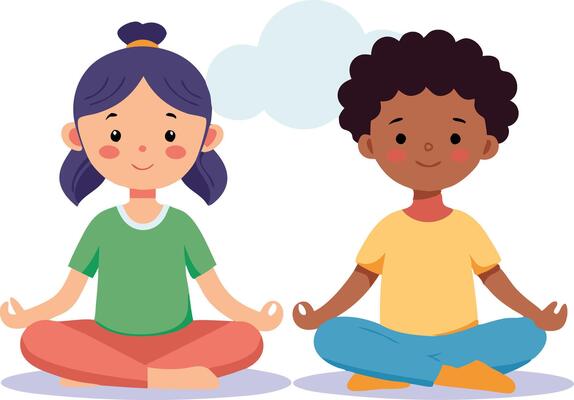
Helping Little Minds Pause, Breathe, and Grow
Mindfulness isn’t just for overworked adults or yogis on a mountaintop. It’s a powerful tool for kids, too—especially 5-year-olds, who are learning to manage big emotions in a big world.
At this age, children are naturally curious, energetic, and still figuring out how to handle frustration, transitions, and sensory overload. Teaching mindfulness now helps them build emotional awareness, attention skills, and inner calm—giving them tools they can carry into school, friendships, and life.
And here’s the good news: it doesn’t have to be complicated. A few minutes of intentional breathing, noticing, and slowing down is enough to make a difference.
Why Mindfulness Matters at Age 5
Research shows that mindfulness can help children:
- Improve attention and impulse control
- Feel and name their emotions more clearly
- Sleep better
- Build resilience to stress and frustration
- Strengthen relationships with caregivers and peers
Mindfulness supports both mental health and brain development, helping kids build habits of reflection instead of reaction.
Five Fun and Simple Mindfulness Activities for 5-Year-Olds
1. Belly Breathing with a Stuffed Animal
What you need: A favorite stuffed animal
How it works: Have your child lie down and place the stuffed animal on their belly. Ask them to watch it rise and fall as they breathe slowly in and out. Try counting to four on the inhale and four on the exhale.
Why it works: The movement of the stuffed animal gives a visual cue that helps focus attention and slows the breath, which calms the nervous system.
2. “Five Senses” Scavenger Hunt
How it works: Go for a short walk or explore a room in your house. Ask your child to find one thing for each of their five senses:
- Something they can see
- Something they can hear
- Something they can touch
- Something they can smell
- Something they can taste (optional—especially helpful during snack time!)
Why it works: This brings your child into the present moment using their senses, which is one of the simplest ways to teach mindfulness.
3. Mindful Coloring
What you need: Crayons or markers and simple coloring pages
How it works: Invite your child to color slowly and intentionally. Ask questions like, “What colors are you using?” or “What do you notice about how it feels to move your hand this way?”
Why it works: Coloring helps calm the body while focusing the mind. It’s especially effective after overstimulating activities or transitions.
4. The “Weather Inside” Feelings Check-In
How it works: Ask your child, “If your feelings were the weather, what would they be like today?”
They might say:
- “Sunny” if they’re feeling happy
- “Cloudy” if they’re unsure or tired
- “Stormy” if they’re upset or mad
- “Windy” if they’re feeling jumpy or silly
Why it works: Using metaphors like weather makes abstract emotions easier for children to name and express. It normalizes all types of feelings and makes them feel seen and heard.
5. Bubble Breaths
What you need: A bottle of bubbles (or pretend!)
How it works: Ask your child to take a slow, deep breath and gently blow to create one big bubble. If you don’t have bubbles, pretend you’re holding a wand. Focus on long, smooth exhales.
Why it works: Blowing bubbles naturally regulates breath. It helps kids slow down, calm their bodies, and feel more in control.
Do’s and Don’ts for Grown-Ups
Do:
- Keep it light and fun. Mindfulness at this age should feel playful, not like homework.
- Practice it with them. Kids learn best by watching us.
- Be patient. It’s okay if they lose focus—just gently guide them back.
- Start small. Even two minutes of mindfulness is meaningful.
- Use it consistently. Build mindfulness into daily routines like bedtime, car rides, or transitions.
Don’t:
- Expect stillness or silence. Wiggling is normal.
- Force participation. Offer it as an option, not a rule.
- Over-explain. Simple directions work best.
- Make it a punishment. Mindfulness is a gift, not a consequence.
- Expect perfection. Focus on progress, not performance.
Best Times to Practice Mindfulness with Kids
- Before school or daycare – to start the day calmly
- During transitions – such as leaving the house or ending screen time
- After a meltdown or tantrum – to help reset and reconnect
- At bedtime – to wind down and ease into sleep
- Anytime they feel overwhelmed – to ground them back in the moment
Encouragement for Parents and Caregivers
Mindfulness with young children isn’t about getting them to sit cross-legged and meditate for 20 minutes. It’s about helping them slow down enough to notice what’s going on inside and outside of them—whether that’s a deep breath, the sound of birds, or the way a crayon glides on paper.
You don’t need to be a mindfulness expert. You just need to be present, curious, and willing to model what it looks like to pause and breathe. Every mindful moment you share helps your child build lifelong skills for handling stress, big feelings, and the rollercoaster of being human.
Video Resources:
English:
Spanish:
Local Resources for Westchester Families
United Way of Westchester and Putnam – 2-1-1 Helpline
Free referrals to parenting programs, mental health supports, and childcare resources.
Phone: 2-1-1
Website: https://www.uwwp.org
Child Care Council of Westchester
Support for families, professional development, and referrals to child care.
Phone: (914) 761-3456
Website: https://www.childcarewestchester.org
Family Ties of Westchester
Support for families raising children with emotional or behavioral challenges.
Phone: (914) 995-5238
Website: https://www.familytieswestchester.org
Bibliography
- Zelazo, P. D., & Lyons, K. E. (2012). The Potential Benefits of Mindfulness Training in Early Childhood: A Developmental Social Cognitive Neuroscience Perspective. Child Development Perspectives.
- Thompson, R. A. (2014). Stress and Child Development. Future of Children, 24(1), 41-59.
- American Academy of Pediatrics (2016). Mindfulness in Pediatrics: A Review for Clinicians.
- Siegel, D. J., & Bryson, T. P. (2011). The Whole-Brain Child: 12 Revolutionary Strategies to Nurture Your Child’s Developing Mind.
Legal Disclaimer: The information provided by our nonprofit is for informational purposes only and not a substitute for professional medical advice, diagnosis, or treatment. Always consult a qualified healthcare provider for medical concerns. We make no guarantees about the accuracy or completeness of the information and are not liable for any decisions made based on it. If you have a medical emergency, call 911 or seek immediate medical care.