
Introduction
Five-year-olds are full of energy, opinions, and budding independence. At this stage, they’re eager to help and start understanding their role in the family. By introducing age-appropriate chores and offering choices, parents can foster responsibility, independence, and confidence in their children. This article explores the benefits of chores, evidence-based guidance on what’s appropriate at age five, and practical tools to get started.
Why Chores Matter
Chores are not just about helping out—they’re developmental gold. According to a longitudinal study from the University of Minnesota, children who had chores starting at age 3–4 were more likely to have good relationships, achieve academic success, and become self-sufficient adults (Rossmann, 2002).
Chores build:
• Executive functioning (planning, sequencing, organizing)
• Self-esteem and a sense of accomplishment
• Connection to the family unit
• A mindset of contribution rather than entitlement
Age-Appropriate Chores for 5-Year-Olds
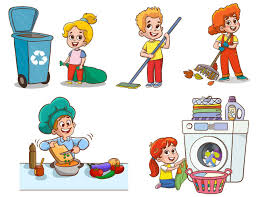
At age five, children are capable of more than many parents realize. Their growing coordination, language skills, and sense of routine make this a key age for building responsibility through meaningful tasks.
Here’s a deeper list of developmentally appropriate chores, organized by type:
Personal Responsibility:
- Get dressed independently and put dirty clothes in the hamper
- Brush teeth and wash face (with supervision)
- Hang up their coat and backpack after school
Household Help:
- Set and clear the table using unbreakable dishes
- Match socks or fold small towels
- Dust low surfaces with a cloth
- Water indoor plants
Toy & Play Area Maintenance:
- Pick up toys and sort them into labeled bins
- Organize books on a shelf
- Put art supplies away after crafting
Animal Care (with supervision):
- Refill a pet’s water bowl
- Scoop pet food using a pre-measured cup
- Help brush or pet-sit with an adult nearby
How Chores Affect Child Development
Cognitive Development:
- Sequencing steps (e.g., “put the napkins first, then the forks”) improves executive functioning
- Sorting and organizing objects enhances classification and problem-solving
Emotional Development:
- Completing tasks builds pride and boosts self-esteem
- Being trusted with a job fosters independence and a sense of identity as a capable helper
Social Development:
- Contributing to the household teaches cooperation and teamwork
- Participating in shared tasks reduces entitlement and nurtures empathy
Physical Development:
- Sweeping, watering, or folding builds coordination and fine motor skills
- Pouring, lifting, and sorting refine hand-eye coordination
Chores are not a one-time lesson—they’re a developmental practice. Keep expectations age-appropriate, and adjust over time as your child grows in confidence and skill.
Dos and Don’ts
DO:
- Model the task before asking your child to try
- Use positive reinforcement and praise effort
- Keep instructions short and specific
- Make chores part of a predictable routine
- Offer limited, structured choices to build decision-making
DON’T:
- Expect perfection—focus on participation
- Use chores as punishment
- Assign too many or overly complex tasks
- Redo their work in front of them
- Bribe constantly—intrinsic motivation matters
The Role of Choice
Giving a five-year-old the power to choose increases cooperation. Instead of ordering, offer structured options like, “Do you want to feed the dog or help put away groceries?” Choices reduce power struggles, develop autonomy, and increase the likelihood that the task gets done willingly.
Making Chores Fun
Use chore charts, sticker rewards, music, or playful challenges to motivate young children. Try racing the clock, using timers, or turning it into a “super helper” mission. Keep it simple and consistent—the goal is to build routine, not resentment.
Modeling Responsibility
Children mimic what they see. Talk aloud about your own tasks (“I’m folding laundry so we have clean clothes!”), and let them see your own sense of responsibility in action. When they feel they’re part of the team, they take pride in contributing.
Video Resources:
English:
Spanish:
Local Resources for Families (Westchester )
- Westchester County Department of Social Services – Provides child welfare, SNAP, and housing services.
Phone: (914) 995-5000 | Website - Child Care Council of Westchester – Helps families find quality child care and supports providers.
Phone: (914) 761-3456 | Website - Family Services of Westchester – Counseling, parenting support, and early childhood programs.
Phone: (914) 937-2320 | Website
Bibliography
Morin, A. (2020). “The Psychological Benefits of Chores for Kids.” Verywell Family. www.verywellfamily.com
Rossmann, M. M. (2002). “The Impact of Chores on Children’s Development.” University of Minnesota.
American Academy of Pediatrics. (2018). “Promoting Healthy Development in Young Children.” www.aap.org
Center on the Developing Child at Harvard University. (2016). “Building Core Capabilities for Life.” developingchild.harvard.edu
Legal Disclaimer: The information provided by our nonprofit is for informational purposes only and not a substitute for professional medical advice, diagnosis, or treatment. Always consult a qualified healthcare provider for medical concerns. We make no guarantees about the accuracy or completeness of the information and are not liable for any decisions made based on it. If you have a medical emergency, call 911 or seek immediate medical care.