Introduction: One Brain, Two Languages, Twice the Power
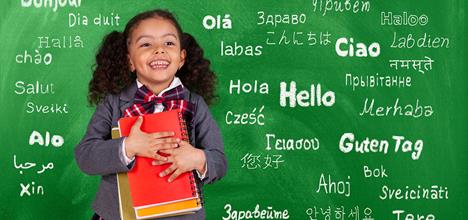
If you’ve ever heard your 5-year-old switch from “Can I have a snack?” to “¿Puedo tener una merienda?” you’ve witnessed something remarkable. That mental gymnastics isn’t confusion—it’s a brilliant brain at work. Whether your household blends Spanish and English, Korean and French, or multiple languages in a glorious swirl, you’re doing more than raising a bilingual kid—you’re raising a cognitive powerhouse.
Still, supporting more than one language at home while prepping for English-speaking school can feel like juggling dictionaries on a balance beam. But good news: you don’t have to choose between your child’s heritage language and their academic success. You can—and should—do both.
What’s Going On Inside the 5-Year-Old Brain?
By age five, kids are in a sweet spot for language acquisition. Their brains are:
- Rapidly forming new connections (more than a million per second!)
- Highly plastic, meaning they adapt quickly to new sounds and structures
- Actively learning how to switch between systems of rules (hello, code-switching)
Being bilingual doesn’t just help with speaking. It improves executive functioning—the part of the brain that manages memory, attention, flexibility, and self-control. In other words, the bilingual brain is more adaptable and efficient. It’s not just learning more words; it’s learning how to learn better.
The Benefits of Bilingualism (Backed by Science)
Children who grow up bilingual or multilingual enjoy a wide range of advantages:
Cognitive Boosts
They tend to have better attention control, stronger working memory, and more flexible thinking. These skills translate to stronger academic performance—especially in reading and problem-solving.
Cultural Connection
Language is a core part of identity. Maintaining a home language helps children stay connected to family heritage, values, and stories. This supports stronger self-esteem and social-emotional development.
Better Long-Term Outcomes
Bilingual kids often grow into adults with access to more career paths, stronger social awareness, and even delayed onset of age-related cognitive decline.
Stronger Metalinguistic Awareness
This fancy phrase means bilingual kids understand how language works. They’re better at spotting grammar rules, understanding that words can have multiple meanings, and adjusting how they speak depending on context.
The Real-Life Challenges
It’s not all brain fireworks and cultural pride. Raising a bilingual child comes with real-world challenges, especially in a society where English dominates the classroom.
Language Preference Swings
Children often go through “I only want to speak English” phases—especially once they start school. This doesn’t mean they’re rejecting their culture; they’re adapting to fit in. Stay consistent and don’t panic.
Limited Access to Materials
Finding quality books, games, and shows in your home language can be difficult, especially if it’s not widely spoken or taught.
Code-Mixing
“Mommy, can I have arroz with my chicken?” Mixing languages is totally normal and part of the learning process. It’s not confusion—it’s your child using all the tools they’ve got.
Pressure from Schools or Family
Some well-meaning people may suggest you stop using your home language to “help them learn English.” The truth? Strong home language skills actually support English acquisition.
Do’s and Don’ts for Bilingual Parenting
DO:
- Speak to your child in your strongest language—even if it’s not English.
- Create regular exposure to both languages through books, music, and conversation.
- Make learning fun. Games, songs, and silly wordplay make things stick.
- Let your child take the lead sometimes. Ask open-ended questions and follow their curiosity.
DON’T:
- Get discouraged if your child responds in English. Just keep modeling the home language.
- Pressure your child to translate or “perform” their language skills for others.
- Compare your bilingual child’s English to a monolingual peer. They’re managing two (or more) systems, and that takes time.
- Give up when things get tricky. Language learning is a marathon, not a sprint.
Tips That Actually Work
- Designate Time or Place for Each Language
Maybe you speak Tagalog at mealtimes and English at bedtime. Or Mondays are French days. Keep it consistent and playful. - Use Multilingual Media
Cartoons, audiobooks, and podcasts in multiple languages are your best friends on a rainy day. - Find Community
Seek out playgroups, cultural centers, or local meetups where your child can hear and use their other language in a social setting. - Celebrate Language Wins
When your child uses a new word or phrase, light up like they just solved world peace. Positive reinforcement fuels confidence. - Stay in the Loop with Teachers
Let your child’s school know about your family’s language use. Ask how they support English learners and how you can reinforce literacy in both languages at home.
Desired Outcomes
Supporting bilingual or multilingual development at age five means your child will:
- Enter school with rich language experiences and broader vocabulary
- Build stronger connections to their culture and family
- Approach learning with cognitive flexibility and confidence
- View language not as a barrier, but as a bridge to new people, ideas, and experiences
In short: your five-year-old may still eat glue and refuse to wear socks, but they’re also mastering a powerful, brain-expanding skillset.
Video Resources:
English:
Spanish:
Local Resources for Westchester Families
1. Westchester Library System – Bilingual Children’s Programming
Phone: (914) 674-3600
Website: https://www.westchesterlibraries.org
2. Peekskill Youth Bureau – Cultural Events & ENL Programs
Phone: (914) 734-8418
Website: https://www.cityofpeekskill.com
3. Mount Vernon Neighborhood Health Center – Bilingual Counseling
Phone: (914) 699-7200
Website: https://www.mvnhc.org
4. PNW BOCES – English as a New Language (ENL) Services
Phone: (914) 248-2300
Website: https://www.pnwboces.org
Bibliography
- Bialystok, E. (2009). Bilingualism: The Good, the Bad, and the Indifferent. Bilingualism: Language and Cognition.
- Grosjean, F. (2010). Bilingual: Life and Reality. Harvard University Press.
- Cummins, J. (2001). Language, Power and Pedagogy: Bilingual Children in the Crossfire.
- American Academy of Pediatrics (2020). Language Development in Bilingual Children.
- National Center for Cultural and Linguistic Responsiveness (2021). Raising Bilingual Children.
Legal Disclaimer: The information provided by our nonprofit is for informational purposes only and not a substitute for professional medical advice, diagnosis, or treatment. Always consult a qualified healthcare provider for medical concerns. We make no guarantees about the accuracy or completeness of the information and are not liable for any decisions made based on it. If you have a medical emergency, call 911 or seek immediate medical care.