
Supporting Your Child’s First Real Friendships
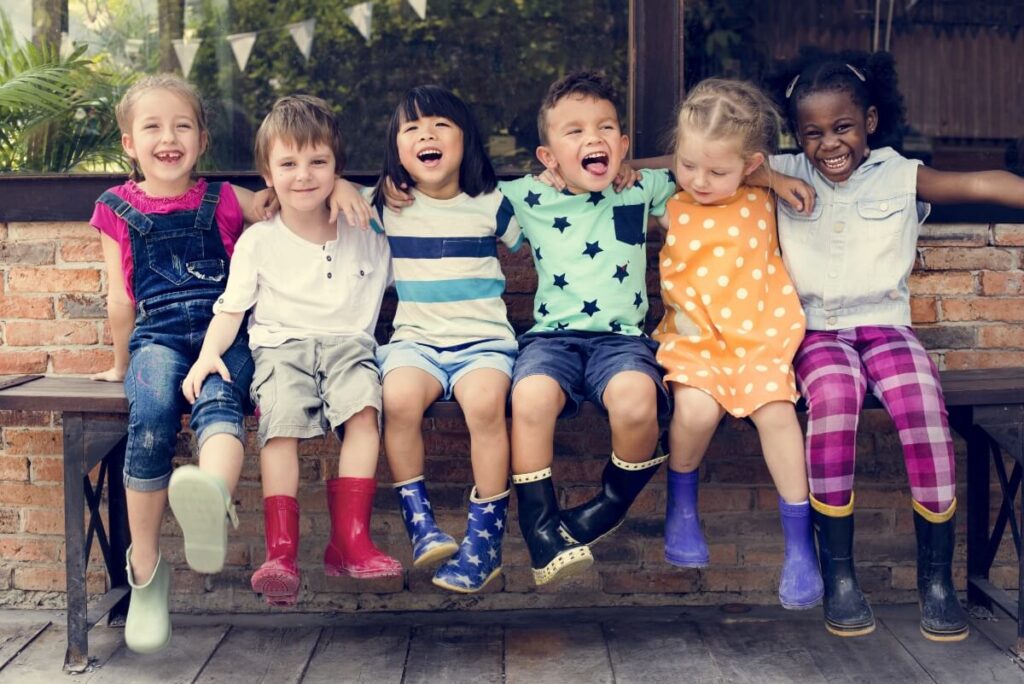
By age five, children are not just interested in play—they’re interested in people. Friendships at this age shift from fleeting interactions toward longer-lasting bonds, built on shared interests, emotional exchanges, and social negotiation. For many children, this is when they begin developing the skills needed for empathy, cooperation, trust, and conflict resolution.
But while the desire for connection is strong, the skills are still new. Five-year-olds need guidance—not pressure—to build and maintain healthy friendships. This article explores what’s developmentally appropriate at this age, the social-emotional benefits of early friendships, and how caregivers can support children in making and keeping friends.
Understanding Social Development at Age 5
Developmentally, 5-year-olds are:
- Transitioning from parallel play to more cooperative play
- Beginning to understand others’ perspectives, though still egocentric at times
- Gaining interest in rules, fairness, and group play
- Developing emotional self-regulation, though they still struggle with impulse control
- Learning to manage conflict but still need adult support to do so effectively
According to Dr. Ross Thompson, developmental psychologist at the University of California, Davis, “By age five, children are beginning to develop the cognitive and emotional tools needed to form more enduring friendships. But they still need lots of help recognizing emotions, solving conflicts, and understanding the give-and-take of relationships.”
Why Friendships Matter at This Age
Friendships at age five are not just about fun—they are fundamental to brain and emotional development. According to a 2020 study published in the Journal of Applied Developmental Psychology, peer relationships in early childhood are directly linked to improved emotional regulation, academic engagement, and even physical health.
Benefits of strong early friendships include:
- Improved emotional intelligence and empathy
- Better school adjustment and classroom behavior
- Decreased risk of anxiety and depression in later childhood
- Practice in problem-solving, negotiation, and compromise
A longitudinal study from the NICHD Early Child Care Research Network also found that children with strong friendships in early childhood were more likely to succeed socially and academically in middle childhood.
Common Challenges in 5-Year-Old Friendships
Children at this age may:
- Declare someone their “best friend” one day and “not my friend” the next
- Struggle with jealousy, exclusion, or bossiness
- Cry, lash out, or withdraw when conflicts occur
- Feel confused about how to join group play or maintain inclusion
Dr. Laura Markham, clinical psychologist and author of Peaceful Parent, Happy Kids, emphasizes that “when kids melt down after a playdate or say ‘nobody likes me,’ it’s not necessarily a crisis. It’s a cue for adults to help them process emotions, reflect, and learn social tools they can use next time.”
How Parents and Caregivers Can Help
1. Coach Social Skills with Gentle Modeling
Children need to see and hear social behavior in action. You can model:
- Greeting people warmly
- Saying, “Can I join you?” or “Let’s take turns.”
- Naming emotions and problem-solving aloud: “You’re both frustrated. Let’s figure out a plan.”
At home, role-playing social situations with dolls, puppets, or pretend games is a powerful, low-pressure way to build social vocabulary.
2. Keep Playdates Short, Structured, and Simple
One-on-one playdates are best at this age. Start with:
- 60–90 minutes
- A few activity options (indoor/outdoor/free play/art)
- Clear expectations and transitions
Prepare your child with a pre-brief:
“You might want to do different things. What’s a kind way to handle that?”
Afterward, debrief together:
“What was fun? What was tricky?”
3. Normalize Conflict as a Learning Opportunity
Children will argue. That’s not failure—it’s part of learning cooperation. Use a calm voice to help them reflect:
- “What happened?”
- “How did you feel?”
- “What could we do differently next time?”
You’re not a referee. You’re a coach helping them build resilience and reflection.
4. Teach Perspective-Taking
Try asking:
- “How do you think your friend felt when you did that?”
- “What would you want someone to do if that happened to you?”
Books are also a great tool. Try:
- My Mouth Is a Volcano by Julia Cook
- How to Be a Friend by Laurie Krasny Brown
- Stick and Stone by Beth Ferry
When Your Child Struggles Socially
Some children are shy, sensitive, or have trouble reading social cues. Others may struggle with impulse control, which can impact friendships.
Red flags to gently watch for:
- Frequent solitary play when others are available
- Constant conflict or rejection by peers
- Statements like “No one wants to play with me” or “I don’t have any friends” that persist over time
Strategies:
- Ask the teacher for insights—they often see more than kids tell you
- Gently scaffold interactions: “Let’s practice how to ask someone to play”
- Build confidence with play in familiar environments before jumping into groups
- Celebrate progress: “You smiled and said hi today—that was brave!”
If challenges persist, you might consult a school counselor or child therapist to rule out any underlying social or emotional delays.
The Long Game: Teaching Relationship Skills for Life
While your child may not stay best friends with anyone from kindergarten, the skills they practice now will follow them for life. Emotional literacy, empathy, cooperation, and repair—these are the tools that build meaningful relationships throughout childhood and into adulthood.
And remember: friendship doesn’t come from forcing connections. It comes from time, practice, and emotional safety. Your calm guidance is the key.
Final Takeaway
At age five, children are just beginning to understand the world of friendship. They will stumble, shout, forgive, and fumble again. That’s developmentally normal.
With your support—through modeling, coaching, and compassion—they can build friendships that nurture their confidence, boost their resilience, and teach them that connection is worth the effort.
Video Resources:
English:
Spanish
Resource List – Westchester
Child Development Resources:
- Child Care Council of Westchester – (914) 761-3456 | www.childcarewestchester.org
- Westchester Jewish Community Services (WJCS) – Offers social skills groups for children | (914) 761-0600 | www.wjcs.com
- Family Services of Westchester (FSW) – Counseling and child support services | www.fsw.org
Books and Tools:
- The Unwritten Rules of Friendship by Natalie Madorsky Elman
- Little Kids, Big Emotions by Alyssa Blask Campbell
- Social stories and visuals from www.teacherspayteachers.com (search: “friendship for kindergarten”)
Bibliography
- Denham, S.A. et al. (2003). “Preschool Emotional Competence: Pathway to Social Competence?” Child Development
- Markham, L. (2012). Peaceful Parent, Happy Kids. Perigee Books.
- NICHD Early Child Care Research Network. (2003). “Does Quality of Child Care Affect Child Outcomes at Age 4½?” Developmental Psychology
- Thompson, R.A. (2006). “The Development of the Person: Social Understanding, Relationships, Conscience, Self.” Handbook of Child Psychology
- Journal of Applied Developmental Psychology (2020). “Peer Relationships in Early Childhood: A Path to Social and Emotional Success”
Legal Disclaimer: The information provided by our nonprofit is for informational purposes only and not a substitute for professional medical advice, diagnosis, or treatment. Always consult a qualified healthcare provider for medical concerns. We make no guarantees about the accuracy or completeness of the information and are not liable for any decisions made based on it. If you have a medical emergency, call 911 or seek immediate medical care.