
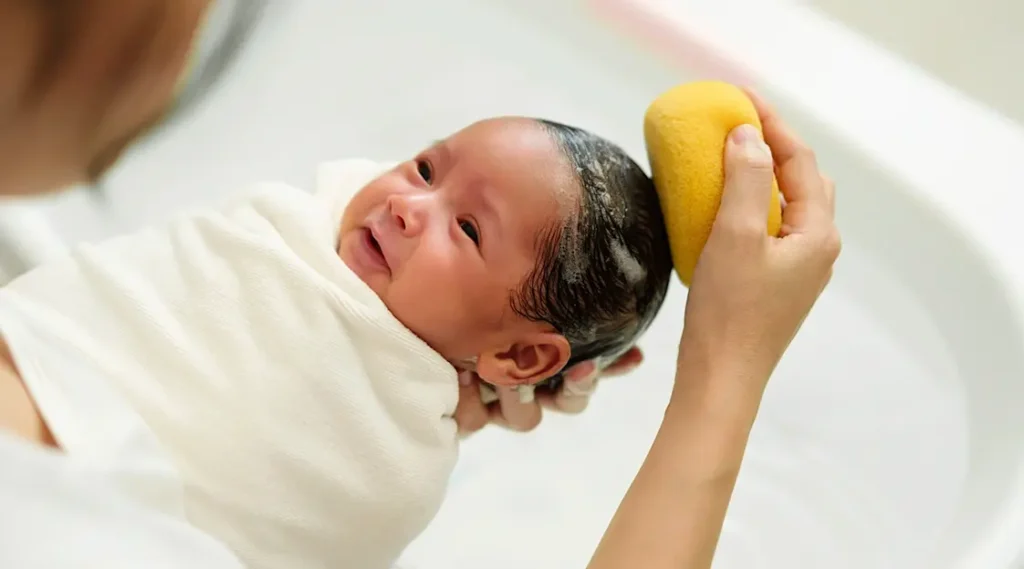
Bathing your baby is an important part of infant hygiene and provides a wonderful opportunity for bonding. Understanding the basics of bathing and hygiene will help keep your baby clean, healthy, and comfortable.
When to Start Bathing Your Newborn
It’s recommended to delay your baby’s first bath until at least 24 hours after birth. This delay helps protect your baby by maintaining body temperature and blood sugar levels, and promotes bonding and breastfeeding.
How Often to Bathe Your Baby
Newborns don’t need a bath every day. Bathing your baby 2-3 times a week is sufficient to keep them clean. Over-bathing can dry out your baby’s skin.
Sponge Baths vs. Tub Baths
Until your baby’s umbilical cord stump falls off and heals, it’s best to give sponge baths. After that, you can transition to tub baths.
Preparing for a Bath
Before starting, gather all necessary supplies:
- A bowl of warm water
- A towel
- Cotton wool
- A fresh nappy
- Clean clothes
Ensure the room is warm to keep your baby comfortable.
Bathing Steps
- Face: Use a damp cotton wool ball to gently clean your baby’s face, starting from the inner eye and moving outward.
- Ears: Clean around the ears with a fresh piece of cotton wool; avoid inserting anything into the ear canal.
- Body: Undress your baby, keeping them wrapped in a towel. Use a soft washcloth to clean their neck, hands, and body.
- Genitals and Bottom: Clean the diaper area last, ensuring all creases are thoroughly cleaned and dried.
Always support your baby’s head and neck during the bath, and never leave them unattended.
Bathing Safety Tips
- Water Temperature: Use warm water, not hot. Test the water temperature with your wrist or elbow to ensure it’s comfortable.
- Supervision: Never leave your baby alone in the bath, even for a moment.
- Bathing Area: Use a small plastic tub or the kitchen sink lined with a clean towel for added comfort and safety. mayoclinic.org
Additional Hygiene Practices
- Umbilical Cord Care: Keep the umbilical cord stump clean and dry. Avoid covering it with the diaper to allow air circulation.
- Diaper Changes: Clean your baby’s diaper area thoroughly during each change to prevent rashes.
- Nail Care: Trim your baby’s nails regularly to prevent scratches.
Remember, bath time is not only about cleanliness but also a chance to bond with your baby. Talk, sing, and enjoy this special time together.
Video Resources:
English
Spanish:
Westchester County Resources
1. 914Cares – Baby Bank & Hygiene Bank
- Services: Provides essential baby items, including hygiene products like baby shampoo, soap, and wipes, to families in need.
- Website: 914cares.org/programs
2. Westchester County Department of Health – For Kids
- Services: Offers resources and information on child health and development, including hygiene practices.
- Website: health.westchestergov.com/for-kids
3. Child Care Council of Westchester – Community Resources
- Services: Provides information and referrals for child care services, parenting education, and resources on child development and hygiene.
- Website: childcarewestchester.org/contact/community-resources
Putnam County Resources
1. Putnam County Department of Health – Parents of Newborns
- Services: Offers information and resources for new parents, including guidance on infant hygiene and bathing practices.
- Website: putnamcountyny.gov/health/newbornsPutnam County, New York
2. Healthy Families Putnam – Maternal Infant Services Network
- Services: Provides home-based services to support expectant families and new parents, focusing on parent-child bonding, child development, and family health, including hygiene education.
- Website: misn-ny.org/healthy-families-putnam
3. CoveCare Center – Family Support Services
- Services: Provides in-home assistance for parents, parent education, and support for families raising children, including guidance on hygiene practices.
- Phone: (845) 225-2700
- Website: covecarecenter.org
Statewide and National Resources
1. New York State Early Intervention Program
- Services: Offers a variety of therapeutic and support services to eligible infants and toddlers with disabilities and their families, including guidance on hygiene practices.
- Website: health.ny.gov/community/infants_children/early_intervention
2. NewYork-Presbyterian – Bathing Your Baby
- Services: Provides information and guidelines on how to safely bathe your baby, including step-by-step instructions and safety tips.
- Website: nyp.org/healthlibrary/multimedia/bathing-your-baby
Articles & Medical Sources:
- American Academy of Dermatology (AAD)
- Newborn Bathing: How to Keep Your Baby’s Skin Healthy
- Retrieved from: https://www.aad.org/public/everyday-care/skin-care-basics/care/newborn-bathing
- American Academy of Pediatrics (AAP) – HealthyChildren.org
- Bathing Your Newborn
- Retrieved from: https://www.healthychildren.org/English/ages-stages/baby/bathing-skin-care/Pages/Bathing-Your-Newborn.aspx
- Centers for Disease Control and Prevention (CDC)
- Umbilical Cord Care & Newborn Hygiene
- Retrieved from: https://www.cdc.gov/ncbddd/birthdefects/newbornscreening.html
- Mayo Clinic
- Newborn Care: Bathing and Hygiene Tips
- Retrieved from: https://www.mayoclinic.org/healthy-lifestyle/infant-and-toddler-health/in-depth/healthy-baby/art-20044438
- National Health Service (NHS UK)
- Washing and Bathing Your Baby
- Retrieved from: https://www.nhs.uk/conditions/baby/caring-for-a-newborn/washing-and-bathing-your-baby
- Raising Children Network (Australia)
- How to Bathe a Newborn: Step-by-Step Guide
- Retrieved from: https://raisingchildren.net.au/newborns/health-daily-care/hygiene-keeping-clean/bathing-a-newborn
Images Used:
Baby’s First Bath: How to Bathe a Newborn
Legal Disclaimer: The information provided by our nonprofit is for informational purposes only and not a substitute for professional medical advice, diagnosis, or treatment. Always consult a qualified healthcare provider for medical concerns. We make no guarantees about the accuracy or completeness of the information and are not liable for any decisions made based on it. If you have a medical emergency, call 911 or seek immediate medical care.