
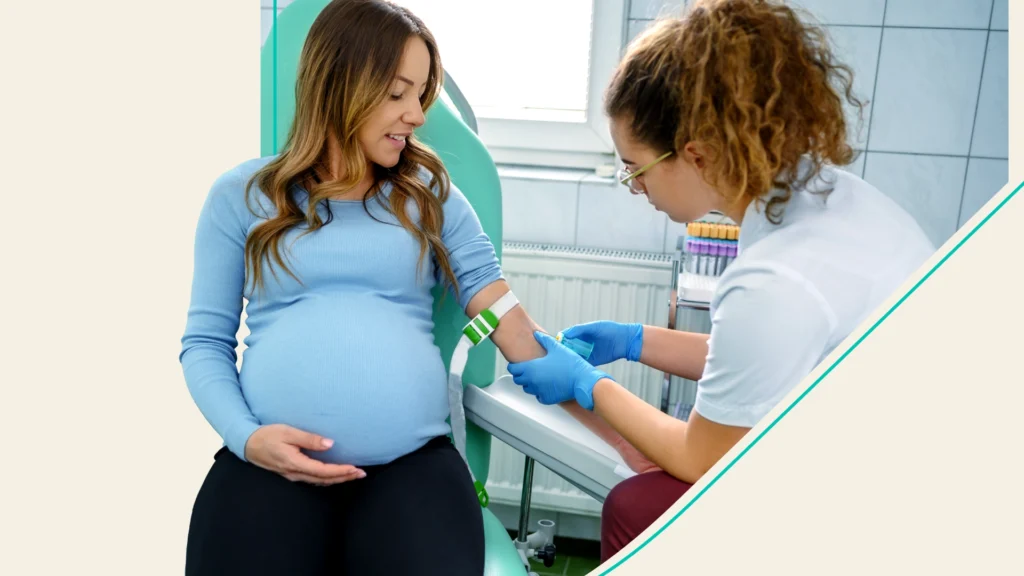
Bringing a baby into the world is a journey filled with joy, curiosity, and—let’s be honest—a few big questions. One of the first stops along the way? Prenatal testing and genetic screening.
It may sound overwhelming at first (hello, scary-sounding science words), but understanding your baby’s health before birth can actually bring you peace of mind, help you prepare, and strengthen the bond between you and your partner. The goal isn’t to scare—it’s to empower you with information.
Let’s break it down, step-by-step—with sensitivity, clarity, and compassion.
First Things First: Why Talk About Genetics?
We all carry genes—some dominant, some recessive—that make us who we are. Most of the time, those recessive genes don’t cause any issues. But if both parents carry the same recessive gene, there’s a 1 in 4 chance that the baby could inherit two copies and develop a related condition.
This is why it’s helpful to explore family history and possibly consider carrier screening—a test that checks whether you or your partner carry certain inherited genetic conditions.
🧬 Examples of conditions linked to recessive genes:
- Cystic fibrosis
- Tay-Sachs disease
- Sickle cell anemia
- Thalassemia
- Spinal muscular atrophy
Dos and Don’ts of Genetic Testing Conversations
DO:
- Start the conversation early. It’s ideal to discuss testing during preconception or the first trimester.
- Be honest with your doctor about family health history—even distant relatives.
- Support each other—genetic testing is emotional, and it’s normal to feel nervous.
- Ask questions—your provider or genetic counselor is there to explain everything.
- Remember: Knowledge is power, not a verdict. Knowing your risks helps you prepare—not panic.
DON’T:
- Don’t assume “no news is good news.” Many carriers of recessive genes have no symptoms.
- Don’t place blame—genetics are inherited. This isn’t anyone’s “fault.”
- Don’t go down a Google rabbit hole—talk to a medical professional.
- Don’t make rushed decisions—take time to understand your options.
What Tests Might Be Recommended?
1. Carrier Screening (Before or During Pregnancy)
Checks if you or your partner carry genes for inherited conditions.
Usually a simple blood or saliva test.
Often recommended if there’s a family history or you’re part of a high-risk ethnic group.
If both partners are carriers for the same condition, more testing will be offered to check if the fetus is affected.
2. First Trimester Screening (10–13 weeks)
Combines bloodwork and an ultrasound (nuchal translucency scan).
Assesses risk for Down syndrome (trisomy 21), trisomy 18, and trisomy 13.
3. Non-Invasive Prenatal Testing (NIPT) (After 10 weeks)
Analyzes small fragments of fetal DNA in the mother’s blood.
Screens for common chromosomal conditions and sometimes sex-linked disorders.
Highly accurate—but still considered a screening, not a diagnosis.
4. Diagnostic Tests (If Screenings Raise Red Flags)
These are more precise but also more invasive:
Chorionic Villus Sampling (CVS)
- Done at 10–13 weeks
- Takes a small sample of placental tissue
- Tests for genetic abnormalities
Amniocentesis
- Done at 15–20 weeks
- Takes a sample of amniotic fluid
- Can detect chromosomal issues and neural tube defects
🩺 These are typically offered only if screening tests suggest a risk.
What If a Test Comes Back With Unexpected Results?
First, take a deep breath. Getting a “positive” or “abnormal” result doesn’t always mean something is wrong—it just means more information is needed.
What to Do:
- Meet with a genetic counselor—they’ll explain what the results mean, what comes next, and all available options.
- Talk openly with your partner—you’re a team, and this is a moment for unity and care.
- Explore next steps with your provider, whether it’s further testing, early treatment, or simply more monitoring.
- Seek emotional support—through a therapist, support group, or trusted community. You are not alone.
Remember: Genetic conditions are just one part of the picture. Many families go on to have healthy, happy lives no matter what path their story takes.
How a Partner Can Support Through Testing
- Ask, “How are you feeling about this?”—and really listen.
- Help schedule or attend appointments when possible.
- Write down questions to ask the provider together.
- Handle meals, chores, or errands when your partner is feeling anxious.
- Be reassuring, not reactive. Say things like, “We’ll handle this together,” or “Whatever the results, we’ve got this.”
Final Thoughts: Genetics Don’t Define You—Love Does
Prenatal testing isn’t about finding flaws—it’s about gaining understanding, choice, and support. Exploring genetics can be an emotional journey, but it’s also a way to be proactive and loving parents from the very beginning.
Whether the results bring peace of mind or more questions, know this: You have options. You have support. And you’re not in it alone.
Your story is unique, your baby is already loved, and you’re doing a great job.
Westchester County Resources
1. Westchester County Department of Health – Maternal Child Health Services
Provides referrals for prenatal care, information on prenatal testing, and WIC services.
Phone: (914) 813-5000
Email: hwest@westchestercountyny.gov
Website: https://health.westchestergov.com
2. Westchester Medical Center Health Network (WMCHealth) – Valhalla Campus
Offers prenatal testing, genetic counseling, maternal-fetal medicine, and NICU services.
Phone: (914) 493-2250
Email: info@wmchealth.org
Website: https://www.westchestermedicalcenter.org
3. Open Door Family Medical Centers – Ossining, Mount Kisco, Port Chester, Sleepy Hollow
Community-based clinics providing prenatal care and referrals for testing and genetic support.
Phone: (914) 941-1263
Email: info@odfmc.org
Website: https://www.opendoormedical.org
4. Planned Parenthood Hudson Peconic – White Plains, New Rochelle, Mount Vernon, Yonkers
Provides reproductive health services, prenatal consultations, and genetic testing referrals.
Phone: (800) 230-7526
Email: info@pphp.org
Website: https://www.plannedparenthood.org/planned-parenthood-hudson-peconic
5. Lower Hudson Valley Perinatal Network
Regional nonprofit supporting prenatal health and connecting families with testing, genetics, and maternal-fetal medicine resources.
Phone: (845) 483-8000
Email: info@lhvpn.net
Website: https://www.lhvpn.net
6. 211 of the Hudson Valley (United Way of Westchester and Putnam)
Referral helpline for local prenatal testing resources, genetic counseling, transportation, and support.
Phone: 2-1-1 or (800) 899-1479
Email: 211info@uwwp.org
Website: https://www.hudson211.org
7. The Baby Steps Program – Maria Fareri Children’s Hospital
Supportive services for expectant parents, including referrals for prenatal genetic diagnostics and counseling.
Phone: (914) 493-6644
Email: babysteps@wmchealth.org
Website: https://www.mariafarerichildrens.org
Putnam County Resources
1. Putnam County Department of Health – Maternal & Infant Services
Provides prenatal health education, referrals for prenatal testing, and family planning resources.
Phone: (845) 808-1390
Email: health@putnamcountyny.gov
Website: https://www.putnamcountyny.com/health
2. Open Door Family Medical Center – Brewster Location
Offers prenatal care, health screenings, and referrals for genetic counseling.
Phone: (845) 279-6999
Email: info@odfmc.org
Website: https://www.opendoormedical.org
3. 211 of the Hudson Valley (United Way of Westchester and Putnam)
Includes local referrals for prenatal support, testing, and social services in Putnam County.
Phone: 2-1-1 or (800) 899-1479
Email: 211info@uwwp.org
Website: https://www.hudson211.org
Bibliography
American College of Obstetricians and Gynecologists. (2020). Prenatal genetic diagnostic tests. https://www.acog.org/womens-health/faqs/prenatal-genetic-diagnostic-tests
March of Dimes. (2023). Prenatal care and tests. https://www.marchofdimes.org/find-support/topics/pregnancy/prenatal-care
National Institutes of Health. (2022). Recessive inheritance. MedlinePlus Genetics. https://medlineplus.gov/genetics/understanding/inheritance/inheritancepatterns/
Rappaport, M. (2020). Understanding prenatal genetic testing: What to expect and how to prepare. Journal of Obstetric, Gynecologic & Neonatal Nursing, 49(6), 478–484. https://doi.org/10.1016/j.jogn.2020.09.002
National Society of Genetic Counselors. (n.d.). What is genetic counseling? https://www.nsgc.org/
Legal Disclaimer: The information provided by our nonprofit is for informational purposes only and not a substitute for professional medical advice, diagnosis, or treatment. Always consult a qualified healthcare provider for medical concerns. We make no guarantees about the accuracy or completeness of the information and are not liable for any decisions made based on it. If you have a medical emergency, call 911 or seek immediate medical care.