Turning Pages, Making Sounds, and Building Big Brains
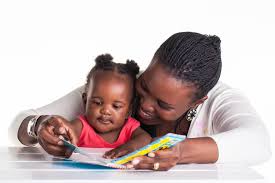
Between 6 and 12 months, your baby is transforming from a cuddly potato into a curious explorer. They’re babbling, grabbing, flipping, chewing—on everything, including your books. Perfect. This is a magical window to introduce regular reading routines that support your baby’s growing mind, body, and connection to you.
Reading at this age isn’t about teaching letters or numbers. It’s about making sounds, exploring textures, building bonds, and laying a strong foundation for language and learning. Let’s dive in.
Why Reading at 6–12 Months Really Counts
Your baby’s brain is rapidly developing, and every moment spent talking, reading, and bonding supports:
- Language Development
- Cognitive Growth
- Social-Emotional Skills
- Fine Motor Skills
What Kinds of Books Are Best for 6–12 Month Olds?
Choose books that are:
- Interactive (lift-the-flap, textured)
- Focused on daily routines
- Filled with faces and simple emotions
- Repetitive and rhythmic
- Durable (board books are key)
Recommended titles:
- Where Is Baby’s Belly Button? by Karen Katz
- Peek-a-Who? by Nina Laden
- Baby Faces by Margaret Miller
- Brown Bear, Brown Bear, What Do You See? by Bill Martin Jr. and Eric Carle
- Global Babies by The Global Fund for Children
Creating a Reading Routine That Works
Even if it’s just five minutes at a time, reading regularly helps your baby build strong connections between words, meaning, and joy. Start small:
- Read during diaper changes or feeding
- Use bedtime as a predictable reading moment
- Let your baby hold, chew, or flip through the books
- Follow their interest—re-read favorites as often as they like
Common Questions from Parents
Is chewing a book still reading?
Yes—exploration is learning.
Do I have to read every word?
No. Point out pictures, make animal sounds, and talk naturally.
What if they don’t sit still?
No problem. Keep trying in short bursts. Reading is a routine, not a performance.
Growing Together Moment
Keep a small basket of books where your baby plays. Let them choose what they’re drawn to. This sense of ownership helps build early literacy engagement and independence.
Video Resources:
English Videos:
Spanish Videos:
Local Resource Guide: Westchester County
1. Westchester Library System (WLS)
- Free board books, baby storytimes, and literacy kits.
- Website: www.westchesterlibraries.org
- Phone: (914) 674-3600
- Find your local branch for infant programming (e.g., White Plains, Peekskill, Mount Vernon)
2. Reach Out and Read – Local Pediatric Providers
- Books distributed at well-baby visits
- Contact your child’s pediatrician to see if they participate
- Program website: www.reachoutandread.org
3. Westchester Children’s Association (WCA)
- Supports early childhood development, including literacy
- Website: www.wca4kids.org
- Phone: (914) 946-7676
4. United Way of Westchester and Putnam (UWWP)
- Offers programs that include book giveaways and parenting support
- Website: www.uwwp.org
- Phone: (914) 997-6700
5. Family Resource Centers (FRCs)
- Sites like Mt. Kisco Elementary, Port Chester, Ossining, and Peekskill offer free playgroups and baby literacy events
- Contact BOCES Early Childhood at (914) 248-2300 for location-specific programs
For Spanish-Speaking Families and International Partners (UNAM)
1. Biblioteca UNAM Virtual (Mexico)
- Free access to Spanish children’s books and digital literacy tools
- Website: https://www.bibliotecas.unam.mx
2. Fundación Leer (Argentina, accessible globally)
- Spanish-language read-aloud books online
- Website: https://www.leer.org
3. Little Bookworms – Bilingual Storytime (Local Libraries)
- White Plains, Port Chester, and Mount Kisco often offer bilingual English/Spanish story hours
- Contact your branch directly or ask at www.westchesterlibraries.org
Bibliography
- American Academy of Pediatrics. (2014). Literacy Promotion: An Essential Component of Primary Care Pediatric Practice.
- Center on the Developing Child at Harvard University. (2020). Serve and Return Interaction Shapes Brain Architecture.
- National Institute for Literacy. (2008). Developing Early Literacy: Report of the National Early Literacy Panel.
- Zero to Three. (2021). Tips for Reading with Babies. Retrieved from www.zerotothree.org
- Reach Out and Read. (2023). Research Summary. Retrieved from www.reachoutandread.org
Legal Disclaimer: The information provided by our nonprofit is for informational purposes only and not a substitute for professional medical advice, diagnosis, or treatment. Always consult a qualified healthcare provider for medical concerns. We make no guarantees about the accuracy or completeness of the information and are not liable for any decisions made based on it. If you have a medical emergency, call 911 or seek immediate medical care.