
Because They Already Think They’re in Charge Anyway
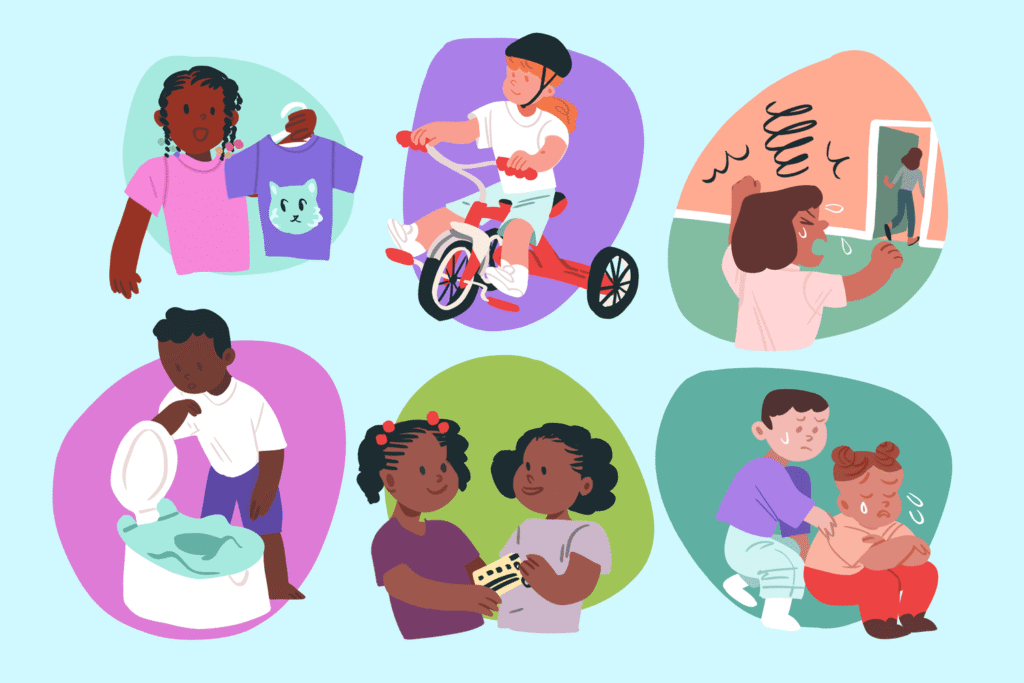
Three-year-olds are natural decision-makers. Just ask the child who insists on wearing a raincoat in July, demands “triangle toast,” and chooses to name the family goldfish “Toilet.”
While their logic may be questionable, their desire for autonomy is very real—and very important. Supporting a 3-year-old’s decision-making skills isn’t about letting them run the house. It’s about helping them practice independence, learn consequences, and build confidence—all in age-appropriate, meltdown-minimizing ways.
Why It Matters
Decision-making is a core executive functioning skill that helps children:
- Learn self-control and problem-solving
- Develop confidence in their abilities
- Understand cause and effect (e.g., “I wore sandals in the rain. Now I have soggy feet.”)
According to the Center on the Developing Child at Harvard, giving young children choices helps them develop agency, or the belief that their actions can influence their world—an early foundation for motivation and resilience.
Do 3-Year-Olds Really Have the Brainpower to Decide Things?
Yes—within reason. At this age, children are moving from pure impulse toward early logic. Their brains are soaking up social cues, learning routines, and testing their sense of control. When you offer guided choices, you help them:
- Feel empowered
- Reduce power struggles
- Build decision-making “muscles” they’ll use their whole lives
Real-Life Ways to Encourage Decision-Making (Without Losing Yours)
1. Offer Two Choices—No More, No Less
Too many options = toddler overload.
- “Do you want the red cup or the blue cup?”
- “Should we read Llama Llama or Pete the Cat?”
Avoid open-ended questions like “What do you want to wear today?” unless you’re emotionally prepared for superhero capes and rubber boots.
2. Let Them Choose Low-Stakes Things
Give them safe control over daily choices:
- Socks, snacks, stories
- Whether to clean up blocks or dolls first
- Which toothbrush color to use
This builds confidence without risking chaos (or glitter).
3. Model Decision-Making Out Loud
- “I’m choosing to bring a jacket because it looks cloudy.”
- “I picked the apples because they’re crunchy and sweet.”
This teaches them that decisions involve thinking, not just reacting.
4. Celebrate the Outcome—Even If It’s Weird
When they pick the polka dot shirt and dinosaur pants combo, smile and let it ride. Not every decision has to be practical—what matters is the process. Let them feel the decision, then reflect together later.
- “You wore rain boots today—it was fun to splash. Do you want to wear sneakers tomorrow if it’s dry?”
5. Coach Through Bigger Choices
As they get more confident, you can coach through more complex decisions:
- “You can have one cookie now or two after dinner.”
- “You can bring one toy to the park. Let’s think about which one fits in your bag.”
These moments help develop delayed gratification and flexible thinking.
When It All Falls Apart (Because It Will)
Sometimes they’ll make a decision, then hate it 14 seconds later. That’s developmentally normal. When this happens:
- Acknowledge the feeling (“It’s hard to wait when you wanted the blue plate.”)
- Hold the boundary with calm consistency
- Offer empathy without changing the rule every time
You’re not raising a perfectly reasonable human. You’re raising a learning human.
Video Resources:
English:
Spanish:
Westchester County Resources
1. WestCOP Head Start / Early Head Start
Offers parent coaching on child development, independence, and decision-making skills.
Phone: (914) 592-5600
Website: westcop.org
2. WJCS Parent Support Services
Workshops and groups on early childhood behavior and parenting strategies.
Phone: (914) 761-0600
Website: wjcs.com
3. Westchester Library System – Parenting Collection
Books and toolkits about child development, autonomy, and emotional intelligence.
Website: westchesterlibraries.org
Bibliography
- Center on the Developing Child at Harvard University. (2020). Executive Function & Self-Regulation. https://developingchild.harvard.edu
- Zelazo, P. D., & Carlson, S. M. (2012). Hot and cool executive function in childhood and adolescence: Development and plasticity. Child Development Perspectives, 6(4), 354–360.
- Grolnick, W. S., & Farkas, M. (2002). Parenting and the development of children’s self-regulation. In M.H. Bornstein (Ed.), Handbook of Parenting, Vol. 5.
- APA. (2022). The importance of teaching children to make decisions. https://www.apa.org
Final Thought
Letting your 3-year-old make decisions doesn’t mean giving up control—it means teaching them how to use it. Every small choice is a step toward a more confident, thoughtful, and independent future. And even if they pick rain boots on a sunny day—at least they picked them.
Would you like this article in printable checklist form for parents or as part of a mini “decision-making toolkit” for classroom and home use? I can also provide a Spanish version or include simple SEL-style reflection activities for toddlers.
Legal Disclaimer: The information provided by our nonprofit is for informational purposes only and not a substitute for professional medical advice, diagnosis, or treatment. Always consult a qualified healthcare provider for medical concerns. We make no guarantees about the accuracy or completeness of the information and are not liable for any decisions made based on it. If you have a medical emergency, call 911 or seek immediate medical care.