Your child is three years old. They play with toys and blocks. But did you know they are also learning to think? When they put puzzle pieces together, they use their brain to solve problems. This is called thinking skills.
What Are Thinking Skills?
Thinking skills help us solve problems. We look at what we know. Then we make good choices. Your three-year-old does this too. They might see that big blocks go on the bottom. Then their tower will not fall down.
Kids as young as 14 months can start to think this way. By age three, kids can do much more than you might think.
Why Is This Important?
When kids learn to think well, good things happen. They get better at solving problems every day. They make smart choices. They get ready for school too.
Playing with puzzles and games helps kids in many ways. They learn to wait. They remember things better. They can focus longer. These skills help them their whole life.
How Three-Year-Olds Think
At age three, kids start to see that things have results. If they push a toy car, it rolls. If they do not eat lunch, they get hungry later.
New research shows something cool. Three-year-olds can understand “if, then” rules. This means your child gets simple rules like “If we clean up toys, then we read a story.”
Three-year-olds also learn about groups. They can put things together that are the same. They might put all red blocks in one pile. Or they might separate cars from trucks.
Easy Ways to Help Your Child Think Better
Ask “What If” Questions
Ask your child simple questions during the day. “What will happen if we put this cup on the edge?” or “What if we wear shorts in the snow?” These questions help kids think ahead.
Play Sorting Games
Give your child things to sort. You can use buttons, blocks, or socks. Ask them to put things together that are the same color or size. This helps them see patterns.
Use Puzzles and Blocks
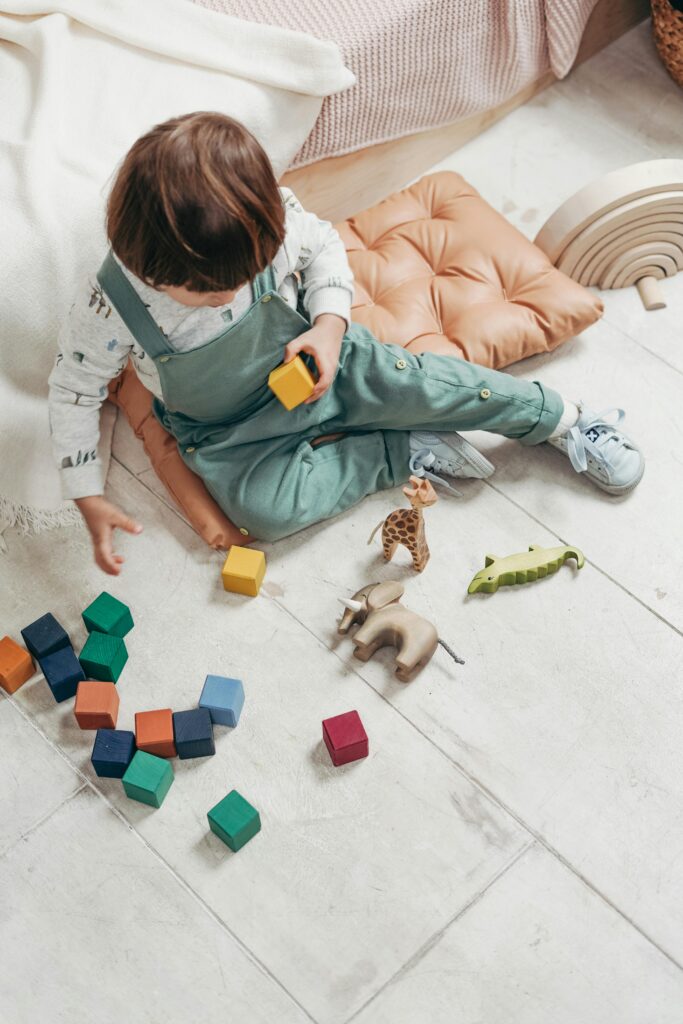
Puzzles are great for kids. When they turn a piece to make it fit, they are thinking hard. Use puzzles with big pieces for three-year-olds.
Blocks teach kids about balance and size. Start with just a few blocks. Let your child try different things.
Let Them Solve Small Problems
Let your child face small, safe challenges. If their toy is stuck under the couch, do not get it right away. Ask them, “How can we get your toy out?” Help them think of ways to solve it.
Read Books Together
Pick books that ask questions. Point to pictures and ask, “What will happen next?” or “Why did the character do that?”
Make It Fun
Keep activities fun and short. Three-year-olds can only focus for 10 to 15 minutes. Always say good things about their tries, even when they make mistakes. Kids learn by trying and making mistakes.
Make thinking part of your day. While cooking, let your child help decide what comes next. While getting dressed, ask them to pick clothes for the weather.
Places to Go in Westchester County
Westchester County has many places where you and your child can practice thinking skills:
Libraries
Local libraries have great programs for families. They have story times and activities just for young kids. Check out programs in White Plains, Yonkers, New Rochelle, and other towns.
Early Learning Programs
Parent Child+ programs have helped families in Westchester for over 50 years. They visit homes in Greenburgh, Mamaroneck, Mount Vernon, New Rochelle, Port Chester, Sleepy Hollow, Tarrytown, White Plains, and Yonkers.
Special Help
The Westchester Institute for Human Development helps children from birth to age three. If you worry about your child, you can call them at 914-813-5094.
Family Services of Westchester has Early Head Start programs. These help build thinking and language skills.
Child Care Help
The Child Care Council of Westchester helps families find good programs. They are open Monday through Friday from 9am to 5pm. On Tuesdays, they stay open until 7pm.
What to Look For
Every child grows at their own speed. Some three-year-olds learn these skills fast. Others need more time. This is normal.
Look for your child to:
- Try different ways to solve problems
- Put similar things together
- Understand that actions have results
- Follow two-step directions
- Want to know how things work
If you worry about your child, talk to your doctor. Getting help early can make a big difference.
The Big Picture
Helping three-year-olds think better is not about making them grow up fast. It is about giving them tools they will use forever. Every time you ask a good question or let them solve a problem, you help their brain grow.
Remember that having fun together is most important. When learning feels like play, kids learn best. Your three-year-old wants to know about the world. When you help them think through problems, you help them get ready for school and life.
The skills your child builds now will help them feel confident. They will become good learners. Start with simple activities and questions. Be patient and kind. Soon you will be amazed at how much your child can figure out.
Video Resources:
English:
Spanish:
References
- Lovevery Blog. (2024). Help your toddler develop an important early reasoning skill. Retrieved from https://blog.lovevery.com/child-development/help-your-toddler-develop-an-important-early-reasoning-skill/
- Jabaloo. Unlocking Your Toddler’s Mind: A Parent’s Guide to Developing Essential Reasoning Skills. Retrieved from https://jabaloo.com/blogs/education/aid-your-toddler-in-developing-crucial-early-reasoning-skills
- Parent Circle. (2022). How to Develop Your Preschooler’s Logical Thinking Skills. Retrieved from https://www.parentcircle.com/how-to-develop-logical-reasoning-skills-for-preschoolers/article
- Frontiers in Psychology. (2021). Children Only 3 Years Old Can Succeed at Conditional “If, Then” Reasoning. Retrieved from https://www.frontiersin.org/journals/psychology/articles/10.3389/fpsyg.2020.571891/full
- Westchester County Mom. (2023). Local Libraries to the Rescue: Programs and Resources for Families. Retrieved from https://westchestercountymom.com/local-libraries-rescue-programs-families/
- Westchester Jewish Community Services. (2024). Early Childhood Parent-Child Programs. Retrieved from https://www.wjcs.com/services/youth-families/early-childhood-parent-child-programs/
- Westchester Institute for Human Development. (2017). Early Childhood Resources. Retrieved from https://www.wihd.org/early-childhood-resources/
- Family Services of Westchester. (2025). Early Head Start & Head Start. Retrieved from https://www.fsw.org/early-head-start-head-start/
Legal Disclaimer: The information provided by our nonprofit is for informational purposes only and not a substitute for professional medical advice, diagnosis, or treatment. Always consult a qualified healthcare provider for medical concerns. We make no guarantees about the accuracy or completeness of the information and are not liable for any decisions made based on it. If you have a medical emergency, call 911 or seek immediate medical care.