Your 4-year-old is getting ready to read! This is so exciting. You can help them learn at home. It’s easier than you think.
Reading starts before kids can read full books. At age 4, your child is ready to learn the basics. The best part? Most learning happens through fun games and activities.
What Are Letter Sounds?
Letter sounds are simple. Each letter makes a sound. The letter B makes a “buh” sound. The letter C makes a “cuh” sound.
When kids know letter sounds, they can read new words. They don’t have to ask you what every word says. They can figure it out themselves!
Your 4-year-old doesn’t need to know all the sounds right now. They just need to start learning. Some days will be good. Some days will be hard. That’s normal.
Is Your Child Ready?
Here are signs your 4-year-old is ready to learn:
- They like listening to books.
2. They ask about letters and words.
3. They notice letters on signs or food boxes.
4. They know some letters from the ABC song.
5.They like silly sounds and rhymes.
If your child does some of these things, they’re ready! If not, don’t worry. Every child is different. You can still do fun activities together.
Fun Games to Try
Letter Sound Games
Start with your child’s name. Point to each letter. Say the sound it makes. “This is M. It says ‘mmm’ like Mommy.”
Do this while eating breakfast or getting dressed. Make it part of your day. Don’t make it feel like school work.
Play “I Spy” with sounds. Say “I spy something that starts with ‘buh.'” Point to a ball or book. Let them guess. Kids love guessing games!
Rhyming Games
Rhyming helps kids hear sounds in words. Try simple rhymes like “cat, hat, bat.” Make up silly rhymes about things you see. “I see a dog on a log!”
The sillier, the better. Kids remember things that make them laugh.
Read rhyming books together. Dr. Seuss books work great. Point out words that rhyme. Say “Listen! Cat and hat sound the same!”
Letter Hunts
Look for letters around your house. Pick one letter for the day. See how many times you can find it. Look at cereal boxes. Look at street signs. Look in books.
Say “Let’s find all the letter S’s today!” This helps kids see letters everywhere, not just in books.
Sound Sorting
Get small things from around your house. Sort them by their first sound. Put all the “B” things together. Ball, book, banana. Put all the “C” things together. Cup, car, cookie.
This helps kids connect sounds to real things they can touch.
Read Together Every Day
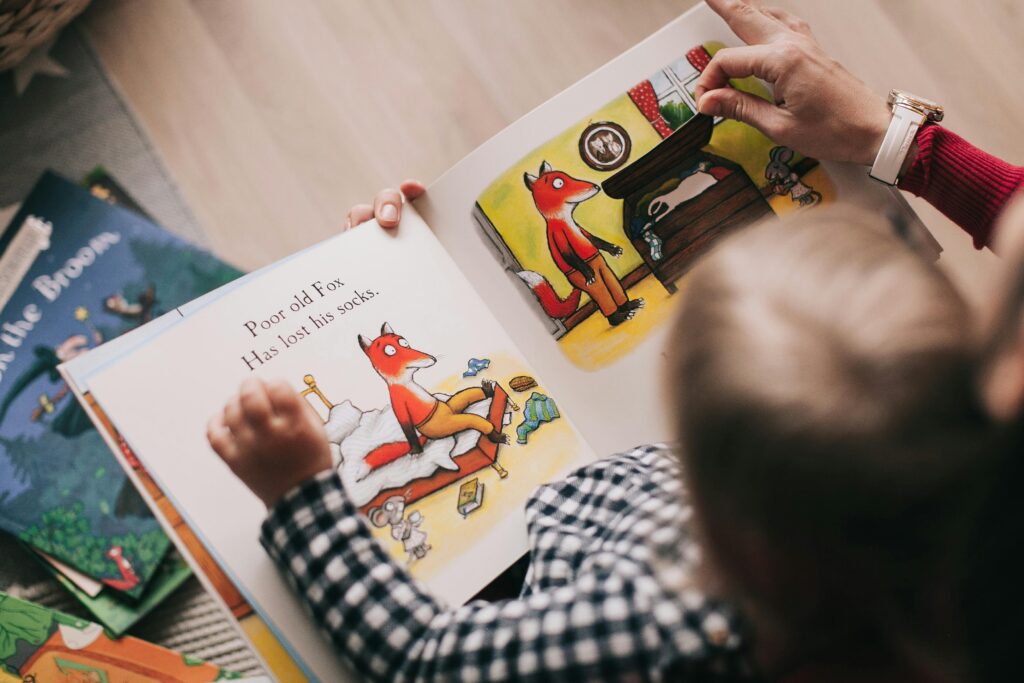
The most important thing is reading with your child every day. Even 10 minutes helps a lot. Pick books they like. It’s okay to read the same book many times.
When you read, point to words as you say them. This shows kids that spoken words match written words. Ask simple questions. “What do you think happens next?” “Who is your favorite character?”
Let your child see you reading too. Read newspapers, books, or recipes. Show them that reading is fun and useful.
Don’t worry about finding perfect books. Library books are great. Old books work fine. Books from the store are good too. The goal is to make reading feel special and fun.
What About Apps and Games?
Some phone apps and computer games can help kids learn letters. These are okay to use sometimes. But they should not replace reading real books together.
Nothing is better than sitting together with a real book. If you use apps, pick simple ones. Look for apps that teach letter sounds. Avoid apps that feel like tests. Learning should still feel like playing at age 4.
When Should You Worry?
Every child learns to read at their own speed. Some 4-year-olds know lots of letter sounds. Others know just a few. Both are normal!
Don’t compare your child to other kids. What matters is that they’re learning and having fun with books.
Talk to your child’s teacher if your 4-year-old doesn’t like books at all. Or if they can’t learn any letters after lots of practice. Or if they can’t hear differences between sounds. But most kids just need more time.
A Little Bit Every Day
You don’t have to be perfect. You just need to do a little bit every day. Five minutes of letter practice each day is better than one hour once a week.
Make letter sounds part of things you already do. Talk about letters while cooking dinner. Point out letters on signs while driving. Make it part of your life.
Some days will be good. Your child will be excited about letters. Some days will be hard. They won’t want to practice. That’s okay! Try again tomorrow.
You’re Doing Great
You don’t need to be a teacher to help your child learn to read. You’re already doing good things. You read together. You talk with your child. You care about their learning.
Trust yourself. Trust your child. They want to learn. They will learn. Your job is to make it fun and keep it easy.
Soon your child will read their first word on their own. You will both be so happy! Right now, you get to be their first reading teacher. That’s pretty special.
Video Resoruces:
English:
Spanish:
Westchester County Resources
Help Your 4-Year-Old Learn to Read
Early Literacy & Educational Resources
- Westchester Library System
Local libraries offer story times, phonics activities, reading programs, sensory learning events, and early literacy resources for preschool-aged children.
Website: Westchester Library System - Child Care Council of Westchester
Provides parenting workshops, educational resources, and school readiness support for families with young children.
Website: Child Care Council of Westchester - Westchester Jewish Community Services
Offers family support services, educational programming, counseling resources, and child development support.
Website: Westchester Jewish Community Services - The STEM Alliance
Provides educational enrichment opportunities, family learning events, and early childhood educational programming.
Website: The STEM Alliance
Reading & Learning Resources for Families
- Reading Rockets
Offers evidence-based reading strategies, literacy activities, phonics guidance, and parent-friendly resources for early readers.
Website: Reading Rockets - PBS Kids
Provides educational videos, phonics games, alphabet activities, and reading tools designed for preschool-aged children.
Website: PBS Kids Learning Resources - Khan Academy Kids
Free educational app featuring reading readiness activities, phonics games, storytelling, and literacy development tools.
Website: Khan Academy Kids - American Academy of Pediatrics HealthyChildren.org
Provides guidance on literacy development, reading readiness, language milestones, and early childhood learning.
Website: HealthyChildren.org
Family & Community Support
- 211 Hudson Valley
Connects families with educational resources, childcare support, developmental services, counseling programs, and community assistance programs.
Dial 211
Website: 211 Hudson Valley - Westchester Institute for Human Development
Provides developmental evaluations, speech and language support resources, and early childhood guidance services.
Website: Westchester Institute for Human Development
Bibliography
- Reading Rockets. Early Literacy & Reading Readiness Resources.
Reading Rockets - American Academy of Pediatrics. HealthyChildren.org Literacy Resources.
HealthyChildren.org - National Association for the Education of Young Children. Early Literacy Resources for Families.
NAEYC Family Resources - PBS Kids. Preschool Reading Activities & Games.
PBS Kids Learning Resources - Centers for Disease Control and Prevention. Child Development & Language Milestones.
CDC Child Development Resources
Legal Disclaimer: The information provided by our nonprofit is for informational purposes only and not a substitute for professional medical advice, diagnosis, or treatment. Always consult a qualified healthcare provider for medical concerns. We make no guarantees about the accuracy or completeness of the information and are not liable for any decisions made based on it. If you have a medical emergency, call 911 or seek immediate medical care.