
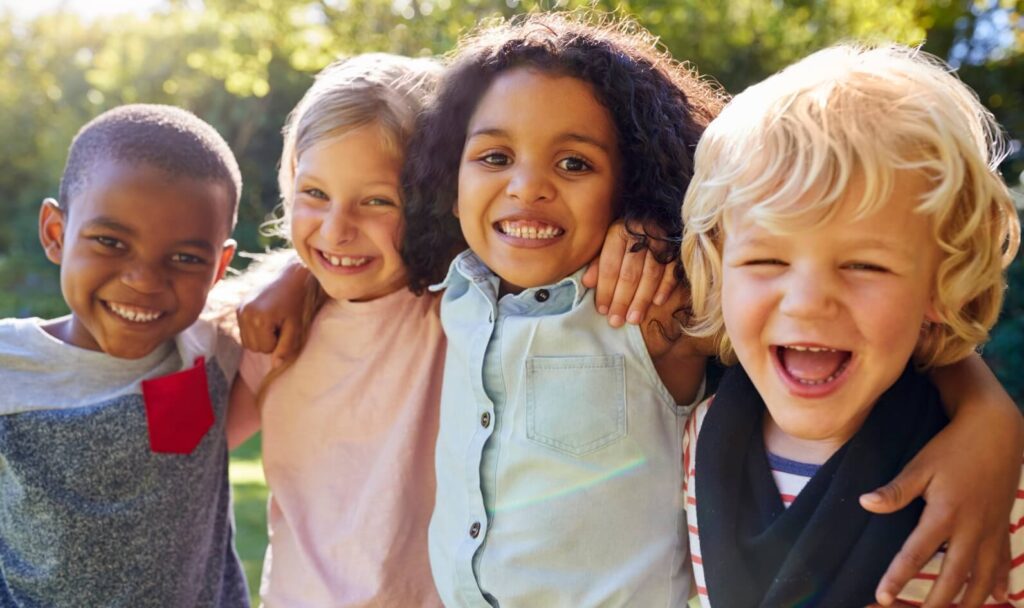
At five years old, your child is entering the exciting world of friendships with all the joy, confusion, giggles, and occasional meltdowns that come with it. This is a magical time for social development—and also one that can feel a little overwhelming for both kids and parents.
But here’s the good news: you don’t need to be a social scientist to help your child form healthy, happy relationships. You just need a bit of guidance, some realistic expectations, and a whole lot of love. Let’s walk through it together.
Understanding the 5-Year-Old Social Brain
At this age, your child is in what psychologist Erik Erikson called the “initiative vs. guilt” stage. This means they’re eager to explore, lead, and test social roles—especially with peers. They’re also more aware of fairness, turn-taking, and group inclusion, but they’re still learning how to manage the strong emotions that come with rejection, jealousy, or misunderstandings.
Developmental theorists like Jean Piaget would place 5-year-olds in the preoperational stage, meaning they’re imaginative and curious but still a bit self-centered in thinking. This can make perspective-taking (understanding how a friend feels) tricky at times, but they’re starting to develop those early seeds of empathy.
This is also a prime time for emotional growth. Daniel Goleman, who popularized emotional intelligence (EQ), would highlight that helping children name, understand, and regulate emotions in social situations is foundational for long-term social success.
Common Friendship Challenges at This Age
- “You’re not my friend anymore!” – A very common phrase. Kids often say this out of frustration or when they’re experimenting with social power.
- Exclusion and cliques – Even in preschool, kids may form exclusive groups. It’s usually not malicious—more often it’s about familiarity or comfort.
- Jealousy or possessiveness – Your child may struggle when a best friend plays with someone else.
- Short-lived conflicts – The good news: kids at this age bounce back quickly from disagreements. The bad news: parents sometimes don’t.
Practical Tips for Supporting Healthy Friendships
Model positive social behavior.
Children learn by watching us. Show them how to greet others, express appreciation, apologize sincerely, and resolve conflicts calmly. Narrate your social interactions when appropriate: “I told my friend I was sorry because I made a mistake. That helps our friendship stay strong.”
Avoid forcing friendships.
If your child isn’t clicking with a certain peer, don’t pressure it. Friendships should feel safe and natural. Sometimes kids just need space to find their own groove.
Coach, don’t micromanage.
Instead of jumping in to fix every disagreement, ask open-ended questions:
“What do you think happened?”
“How do you think your friend felt?”
“What could you do differently next time?”
This helps build problem-solving and emotional insight.
Validate big feelings.
It might seem like a small tiff to you, but to your 5-year-old, a broken friendship can feel like the end of the world. Reflect their emotions: “That sounds really hard. It hurts when someone says they don’t want to play.”
Encourage inclusive play.
Suggest games that involve multiple players. Group activities like building a fort, creating art, or playing pretend can help kids learn cooperation and turn-taking.
Avoid labeling kids.
Instead of saying, “That kid is mean,” try, “It sounds like he was having a hard time using kind words today.” Labels can stick in a child’s mind and shape their social worldview.
Create opportunities to practice.
Set up playdates, join local playgroups, attend library storytime, or explore community events where your child can interact with new peers in low-pressure settings.
What If My Child Struggles to Make Friends?
It’s okay. Not all kids are social butterflies. Some are slow to warm up, some prefer solo play, and some may be more sensitive or easily overwhelmed.
Here are a few things that can help:
- Practice simple scripts at home, like “Can I play with you?” or “What are you playing?”
- Read stories about friendship and talk about how the characters solve social problems
- Keep your tone calm and reassuring; your confidence helps your child feel safe
- Praise effort and courage more than outcomes: “You were brave to talk to that new friend”
When to Reach Out for Extra Help
Some children may benefit from additional support if:
- They consistently avoid peers or seem extremely anxious in social settings
- They frequently become aggressive or extremely withdrawn during group play
- They seem overwhelmed by friendships or often feel rejected
If that sounds familiar, consider speaking to your pediatrician, a school counselor, or a licensed child therapist. Social skills groups or one-on-one support can make a big difference.
A Kind Note to Parents
If you’ve ever worried about your child’s friendships—or lack of them—you’re not alone. Every child develops at their own pace. What matters most is that your child feels safe, loved, and seen. You are already doing an amazing job by caring about their social world. And that’s the strongest foundation any friendship can grow from.
Video Resources:
English:
Spanish:
Local and National Resources – Westchester
Westchester Jewish Community Services (WJCS)
Offers child and family therapy, social skills groups, and parenting workshops.
Website: www.wjcs.com
Phone: (914) 761-0600
Westchester Library System (WLS)
Hosts free storytimes, inclusive play events, and parenting programs.
Website: www.westchesterlibraries.org
Phone: (914) 231-3200
North East Westchester Special Recreation
Inclusive recreation programs designed to support socialization for children of all abilities.
Website: www.northeastspecialrec.org
Phone: (914) 347-4409
Bibliography & Academic Sources
- Erikson, E. H. (1950). Childhood and Society. New York: W. W. Norton & Company.
[Introduces the stages of psychosocial development, including initiative vs. guilt.] - Piaget, J. (1952). The Origins of Intelligence in Children. New York: International Universities Press.
[Foundational cognitive development theory relevant to social learning.] - Goleman, D. (1995). Emotional Intelligence: Why It Can Matter More Than IQ. New York: Bantam Books.
[Highlights emotional competence as critical for long-term success.] - Denham, S. A. (2006). Social–emotional competence as support for school readiness: What is it and how do we assess it? Early Education and Development, 17(1), 57–89.
[Provides evidence for why social-emotional skills are essential by age five.] - Ladd, G. W. (2005). Children’s Peer Relations and Social Competence: A Century of Progress. Yale University Press.
[Comprehensive overview of how peer relationships impact childhood development.] - Rubin, K. H., Bukowski, W. M., & Laursen, B. (2011). Handbook of Peer Interactions, Relationships, and Groups. New York: Guilford Press.
[Deep dive into research on early peer dynamics and social skill development.] - Bierman, K. L. (2004). Promoting Social and Emotional Competence in Children. New York: Routledge.
[Practical guide for parents and educators, grounded in developmental psychology.] - Rose-Krasnor, L. (1997). The nature of social competence: A theoretical review. Social Development, 6(1), 111–135.
[Outlines a framework for understanding what social competence means in childhood.] - Collaborative for Academic, Social, and Emotional Learning (CASEL). (2021). What is SEL?
https://casel.org/what-is-sel/
[National leader in research-based SEL strategies and policy guidance.]
Legal Disclaimer: The information provided by our nonprofit is for informational purposes only and not a substitute for professional medical advice, diagnosis, or treatment. Always consult a qualified healthcare provider for medical concerns. We make no guarantees about the accuracy or completeness of the information and are not liable for any decisions made based on it. If you have a medical emergency, call 911 or seek immediate medical care.