
Teaching simple concepts like saving, spending, and sharing
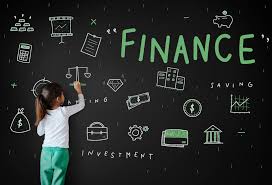
Five-year-olds may not be paying bills, but they are ready to start building the foundation for healthy money habits. At this age, children are developing basic math skills, understanding cause-and-effect, and learning how to make choices. Early lessons about saving, spending, and sharing can set them on a path toward lifelong financial responsibility.
Why Start at Age 5?
Research from the University of Cambridge shows that children’s money habits start forming by age 7, and their attitudes toward saving and spending often mirror the financial behaviors they see at home. Introducing simple concepts now—paired with consistent modeling—gives them more time to practice making thoughtful choices.
Developmentally, 5-year-olds:
- Understand “more” and “less”
- Can count and compare small numbers
- Are beginning to delay gratification for a bigger reward later
- Learn best through hands-on, visual activities
Core Concepts: Saving, Spending, Sharing
- Saving
- What to teach: Putting money aside to use later.
- Why it matters: Builds patience and goal-setting skills.
- How to do it: Use a clear jar so they can see savings grow. Mark progress toward a small toy or book.
- Spending
- What to teach: Using money to buy goods or experiences now.
- Why it matters: Introduces trade-offs and decision-making.
- How to do it: Give them a small amount to choose a snack or item from a store, helping them compare costs.
- Sharing
- What to teach: Giving money or resources to help others.
- Why it matters: Builds empathy, generosity, and community awareness.
- How to do it: Let them choose a cause—like buying pet food for a shelter—and contribute from their “share” jar.
Practical Tips from Financial Educators and Child Psychologists
- Use the “Three Jars” Method: Label jars for Save, Spend, and Share. Every time they get money (allowance, gift), help them divide it equally or in agreed amounts.
- Model out loud: Narrate your own small money decisions (“I’m saving for a new coffee maker, so I’m skipping buying coffee out today”).
- Give them low-stakes practice: Farmers’ markets, garage sales, and school book fairs are great for letting them handle real transactions.
- Praise the process, not the purchase: Acknowledge their decision-making (“You chose to save instead of spend—that took patience!”).
- Use visuals: Charts, stickers, or drawings help young children track goals.
- Keep lessons concrete: At this age, abstract concepts like “interest” or “investing” are too advanced—focus on tangible actions and short-term goals.
Do’s & Don’ts
Do:
- Involve them in small, everyday money moments.
- Keep lessons short and playful.
- Use real coins and bills for a hands-on feel.
- Reinforce delayed gratification with visible progress (e.g., “You need $5 more to get your puzzle!”).
Don’t:
- Lecture about complex financial systems—they’ll tune out.
- Bail them out every time they overspend—natural consequences teach best.
- Tie money lessons only to chores; at this age, it’s about learning, not labor-value debates.
The Psychology Behind Early Money Lessons
- Delayed gratification: Practicing saving strengthens self-control, a skill linked to better academic and life outcomes (Mischel’s “marshmallow test” findings).
- Numeracy and executive function: Handling coins and tracking goals exercises working memory, planning, and flexible thinking.
- Social-emotional learning: Sharing money supports empathy and perspective-taking, key components of emotional intelligence.
Video Resources:
English:
Spanish:
Westchester County Resources
Westchester Library System – Money Smart for Young People Programs
- Main Office: 570 Taxter Rd., Suite 400, Elmsford, NY 10523
- Phone: (914) 231-3227
- Website: www.westchesterlibraries.org
Junior Achievement of New York – Westchester Programs
- Address: 420 Lexington Ave., Suite 205, New York, NY 10170 (serves Westchester)
- Phone: (212) 907-0040
- Website: newyork.ja.org
Bibliography
- American Psychological Association. (2017). Teaching children about money: Psychology can help.
- Friedline, T., Elliott, W., & Nam, I. (2012). Predicting savings for youth: Youth development and financial capability. Children and Youth Services Review, 34(9), 1884–1895.
- Mischel, W., Shoda, Y., & Rodriguez, M. L. (1989). Delay of gratification in children. Science, 244(4907), 933–938.
- Whitebread, D., & Bingham, S. (2013). Habit formation and learning in young children. University of Cambridge.
Legal Disclaimer: The information provided by our nonprofit is for informational purposes only and not a substitute for professional medical advice, diagnosis, or treatment. Always consult a qualified healthcare provider for medical concerns. We make no guarantees about the accuracy or completeness of the information and are not liable for any decisions made based on it. If you have a medical emergency, call 911 or seek immediate medical care.