
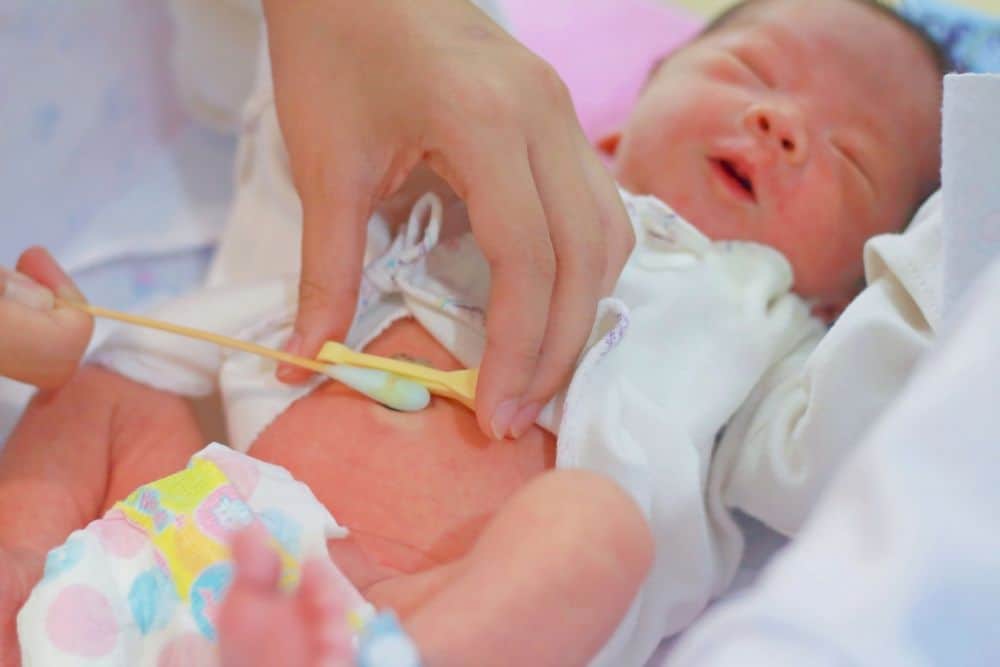
Taking Care of Your Baby’s Belly Button
Hey there, young scientists! Today, let’s talk about something super cool: your belly button! Did you know that when you were born, you had a little piece of a cord attached to your tummy? It’s called the umbilical cord, and it was like a special delivery tube that gave you all the good stuff from your mom while you were in her belly. But after you’re born, that cord isn’t needed anymore. So, let’s learn how to take care of it until it falls off and leaves you with your awesome belly button!
What’s the Umbilical Cord?
Imagine a garden hose that gives water to plants. The umbilical cord is kind of like that hose. It gave you nutrients and oxygen from your mom when you were inside her. After you’re born, the doctor cuts the cord, leaving a small piece called the “stump” on your tummy. Don’t worry; it doesn’t hurt!
How to Take Care of the Umbilical Cord Stump
Taking care of the stump is easy-peasy! Here are some simple steps:
- Keep It Dry: It’s important to keep the stump dry so it can fall off easily. mayoclinic.org
- Sponge Baths Are Best: Instead of putting your baby in a tub, give them a gentle sponge bath. This helps keep the stump dry. mountsinai.org
- Fold the Diaper Down: When you put on the diaper, fold the top part down so it doesn’t cover the stump. This keeps it from getting wet or dirty. chop.edu
- Hands Off: Let the stump fall off on its own. Don’t pull or tug on it, even if it’s hanging by a thread. healthychildren.org
When Will It Fall Off?
The stump usually dries up and falls off by itself in about 1 to 3 weeks. After it falls off, you might see a little pink spot or even a tiny bit of blood. That’s normal!
Watch Out for Signs of Trouble
Most of the time, everything goes smoothly. But if you notice any of these signs, tell a grown-up to call the doctor:
- Bad smell or yellowish goo coming from the stump.
- The skin around the stump is red or swollen.
- You have a fever or seem very fussy.
Fun Fact!
Did you know that everyone’s belly button is unique? Some are “innies” and some are “outies.” It’s like having your very own belly button fingerprint!
Videos to Watch
Want to see more? Check out these videos with a parent or guardian:
English:
Spanish:
Remember, taking care of your belly button is an important part of growing up strong and healthy. Plus, it’s one more thing that makes you special!
County Health Departments – Newborn Hygiene & Cord Care Guidance
1. Westchester County Department of Health – Maternal and Child Health Services
- Phone: (914) 813-5000
- Website: https://health.westchestergov.com
- Description: Offers education on proper umbilical cord care, signs of infection, safe diapering techniques, and when to call a doctor. Public health nurses can assist with questions about newborn hygiene and healing.
2. Putnam County Department of Health – Infant Wellness Services
- Phone: (845) 808-1390
- Website: https://www.putnamcountyny.gov/health
- Description: Provides support and referrals to pediatric providers for parents needing help with umbilical cord healing and newborn care routines.
3. NYS Growing Up Healthy Hotline
- Phone: 1-800-522-5006
- Website: https://www.health.ny.gov
- Description: A 24/7 statewide hotline that offers newborn care guidance, including umbilical cord care and referrals to local health providers.
Pediatric Clinics – Umbilical Cord Monitoring & Newborn Visits
4. Open Door Family Medical Center
- Phone: (914) 632-2737
- Website: https://www.opendoormedical.org
- Locations: Ossining, Mt. Kisco, Port Chester, Sleepy Hollow, Mamaroneck, Brewster
- Description: Offers newborn wellness checks, monitors umbilical cord stump healing, and educates parents on proper cleaning, bathing, and dressing around the area.
5. Sun River Health (formerly HRHCare)
- Peekskill Pediatric Site: (914) 734-8530
- Website: https://www.sunriver.org
- Description: Pediatricians and nurses provide cord care guidance as part of routine well-baby visits and answer questions about normal healing versus signs of infection.
In-Home Support & Hygiene Education
6. Nurse-Family Partnership – Westchester County DOH
- Phone: (914) 813-5094
- Website: https://health.westchestergov.com/nurse-family-partnership
- Description: Nurses visit first-time mothers and provide hands-on demonstrations of umbilical cord care, warning signs (such as redness, swelling, or discharge), and bathing practices.
7. Healthy Families Putnam (MISN)
- Phone: (845) 561-3575
- Website: https://misn-ny.org/healthy-families-putnam
- Description: In-home visits include newborn care instruction, including cord stump cleaning tips, diaper placement to avoid irritation, and understanding when medical care is needed.
WIC & Newborn Health Support
8. WIC – Women, Infants, and Children Program
- Westchester WIC: (914) 995-6350
- Putnam WIC: (845) 279-6997
- Website: https://www.health.ny.gov/prevention/nutrition/wic
- Description: While primarily focused on nutrition, WIC staff provide infant care education including referrals for proper hygiene and healing practices.
National Educational Resources
9. HealthyChildren.org – American Academy of Pediatrics
- Website: https://www.healthychildren.org
- Description: Offers expert-reviewed guidance on umbilical cord care, what’s normal during the healing process, and when to contact a pediatrician.
10. Centers for Disease Control and Prevention (CDC) – Newborn Care
- Website: https://www.cdc.gov
- Description: Provides public health information on safe newborn care practices, including cord stump safety, bathing, and infection prevention.
Bibliography
- Mayo Clinic Staff. “Umbilical cord care: Do’s and don’ts for parents.” Mayo Clinic, https://www.mayoclinic.org/healthy-lifestyle/infant-and-toddler-health/in-depth/umbilical-cord/art-20048250
- Mount Sinai Health System. “Umbilical cord care in newborns.” Mount Sinai, https://www.mountsinai.org/health-library/special-topic/umbilical-cord-care-in-newborns
- Children’s Hospital of Philadelphia. “Umbilical Cord Care.” CHOP, https://www.chop.edu/pages/umbilical-cord-care
- HealthyChildren.org. “Umbilical Cord Care.” American Academy of Pediatrics, https://www.healthychildren.org/English/ages-stages/baby/bathing-skin-care/Pages/Umbilical-Cord-Care.aspx
Legal Disclaimer: The information provided by our nonprofit is for informational purposes only and not a substitute for professional medical advice, diagnosis, or treatment. Always consult a qualified healthcare provider for medical concerns. We make no guarantees about the accuracy or completeness of the information and are not liable for any decisions made based on it. If you have a medical emergency, call 911 or seek immediate medical care.