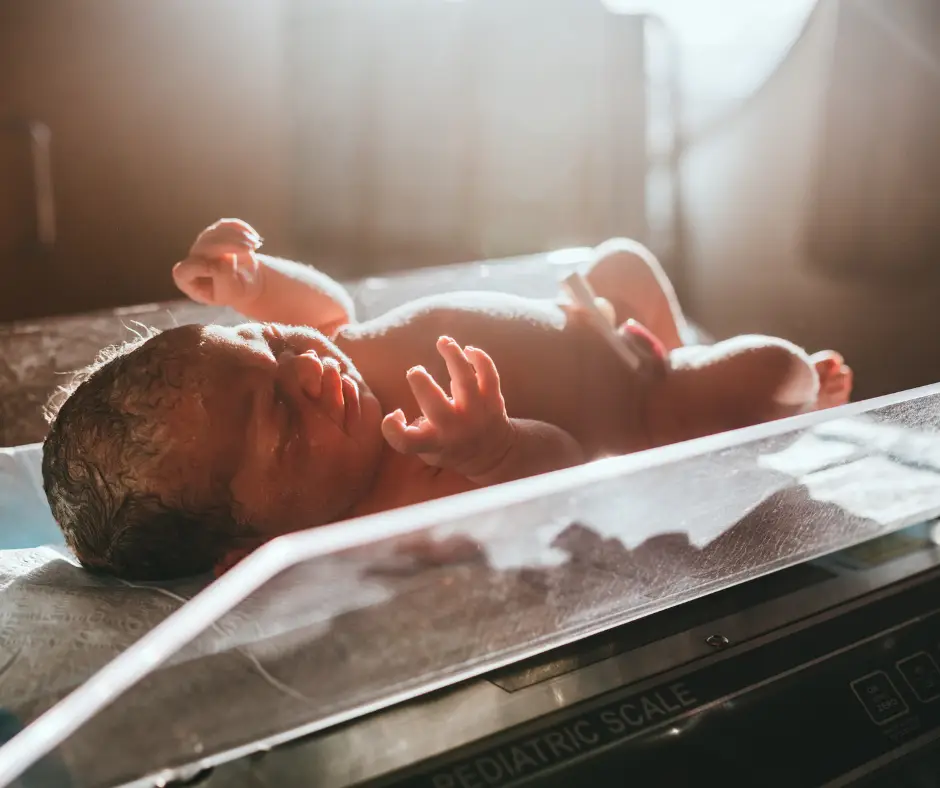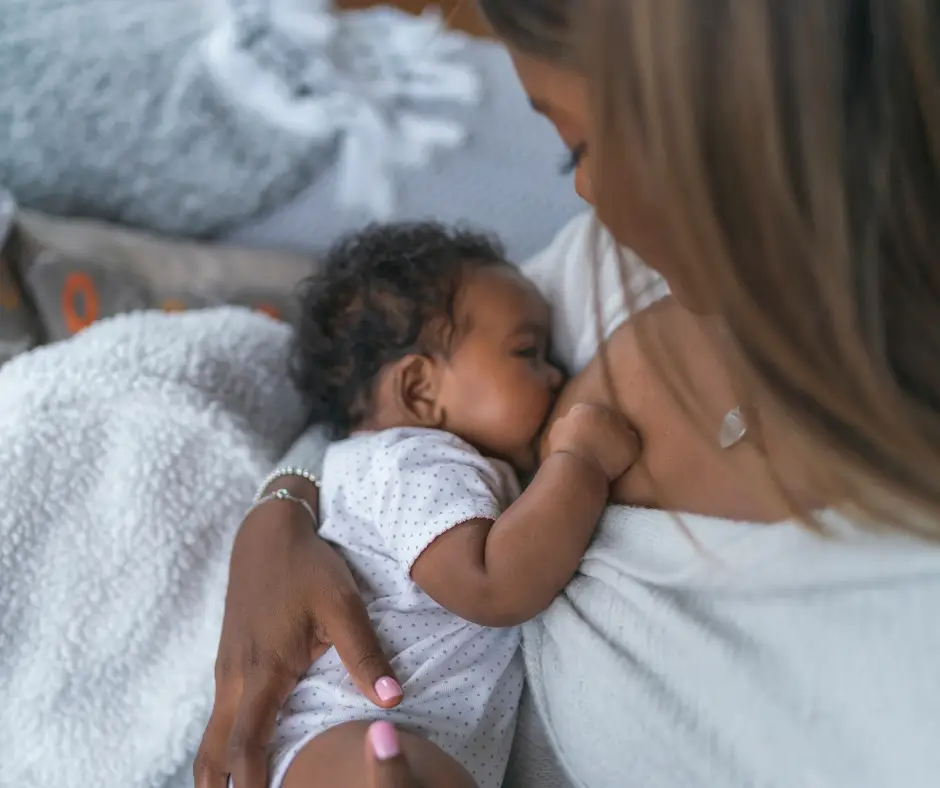
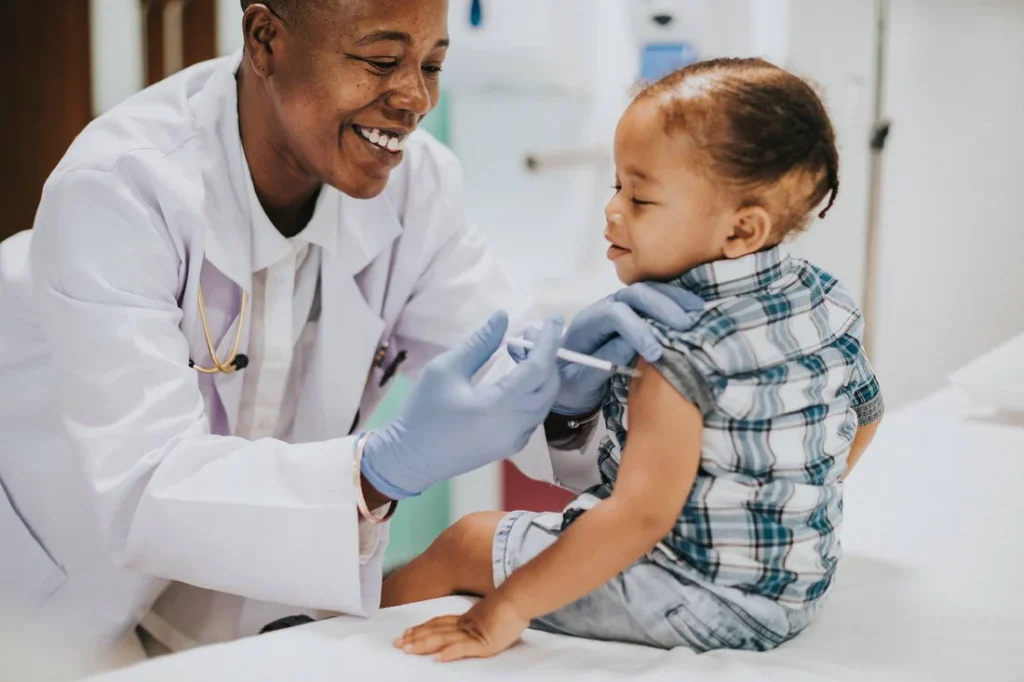
What Are Vaccines and Why Do Babies Need Them?
Vaccines are special shots that help keep babies from getting sick. They train the immune system to fight off diseases before they happen (CDC, 2023). Getting vaccines on time helps keep babies safe and healthy (WHO, 2023).
Vaccine & Immunization Schedule: English
Vaccine & Immunization Schedule: Spanish
Why Are Vaccines Important?
- Protects from serious diseases – Vaccines stop babies from getting sick with dangerous illnesses like measles, polio, and whooping cough (CDC, 2023).
- Helps the immune system – Vaccines teach the body how to fight diseases so babies don’t have to get sick first (AAP, 2023).
- Keeps everyone safe – When many people get vaccinated, it stops diseases from spreading (NIH, 2023).
- Reduces doctor visits – Vaccinated babies are less likely to get sick and go to the hospital (WHO, 2023).
- Prevents antibiotic resistance – Fewer infections mean fewer antibiotics, which helps keep medicine strong for when it’s needed (WHO, 2023).
- Safe and tested – Doctors and scientists make sure vaccines are safe before giving them to babies (FDA, 2023).
Vaccines Babies Need from 0-1 Year
At Birth
- Hepatitis B (HepB) – 1st Dose
- Protects against hepatitis B, a liver disease that can cause lifelong infection and liver failure (CDC, 2023).
1-2 Months
- Hepatitis B (HepB) – 2nd Dose
- Continues to protect against hepatitis B and helps build lifelong immunity (WHO, 2023).
2 Months
- Diphtheria, Tetanus, and Pertussis (DTaP) – 1st Dose
- Prevents whooping cough, tetanus, and diphtheria, which can cause breathing problems, paralysis, and death (NIH, 2023).
- Haemophilus Influenzae Type b (Hib) – 1st Dose
- Protects against bacterial meningitis, a serious brain infection (WHO, 2023).
- Polio (IPV) – 1st Dose
- Prevents polio, which can cause paralysis and lifelong disabilities (CDC, 2023).
- Pneumococcal (PCV13) – 1st Dose
- Protects against pneumonia, ear infections, and meningitis.
- Rotavirus (RV) – 1st Dose (Given by mouth, not a shot.)
- Prevents severe diarrhea and dehydration, which can be dangerous for babies (NIH, 2023).
4 Months
- DTaP – 2nd Dose
- Continues protection against whooping cough, tetanus, and diphtheria.
- Hib – 2nd Dose
- Further protects against bacterial meningitis and pneumonia.
- Polio (IPV) – 2nd Dose
- Strengthens immunity against polio.
- Pneumococcal (PCV13) – 2nd Dose
- Boosts defense against ear infections and pneumonia.
- Rotavirus (RV) – 2nd Dose
- Continues protecting against severe diarrhea.
6 Months
- DTaP – 3rd Dose
- Ensures continued protection from whooping cough, tetanus, and diphtheria.
- Hib – 3rd Dose (if needed, depends on the vaccine brand)
- Additional protection against meningitis and pneumonia.
- Polio (IPV) – 3rd Dose (if needed, depends on the vaccine brand)
- Boosts immunity against polio.
- Pneumococcal (PCV13) – 3rd Dose
- Strengthens protection against lung and ear infections.
- Rotavirus (RV) – 3rd Dose (if needed, depends on the vaccine brand)
- Ensures continued defense against diarrhea-related dehydration.
- Influenza (Flu Vaccine) – 1st Dose (Yearly, starting at 6 months.)
- Helps prevent serious flu complications.
9 Months
- Hepatitis B (HepB) – 3rd Dose (if not given earlier)
- Provides long-term protection against liver disease.
- Influenza (Flu Vaccine) – 2nd Dose (if needed, depending on flu season)
- Strengthens flu immunity.
12 Months
- Haemophilus Influenzae Type b (Hib) – Final Dose
- Completes meningitis protection.
- Pneumococcal (PCV13) – Final Dose
- Strengthens ear infection and pneumonia defense.
- Measles, Mumps, and Rubella (MMR) – 1st Dose
- Prevents measles, mumps, and rubella, which can cause serious complications.
- Varicella (Chickenpox) – 1st Dose
- Stops chickenpox, which can be severe in babies.
- Hepatitis A (HepA) – 1st Dose (2-dose series, second dose given 6 months later.)
- Protects against liver disease from hepatitis A.
How Do Vaccines Work?
- Trains the body – Vaccines teach the immune system to fight diseases (WHO, 2023).
- Keeps babies from getting sick – Instead of catching a disease, the body learns how to fight it safely (AAP, 2023).
- Prevents outbreaks – Fewer sick people means less spread of disease (CDC, 2023).
Final Thoughts
Vaccines keep babies healthy and safe. Following the vaccine schedule makes sure they are protected at the right time. If you have questions, talk to your doctor to keep your baby on track!
Video resources:
English:
Spanish
County Health Departments – Immunizations and Clinics
1. Westchester County Department of Health – Immunization Program
- Phone: (914) 813-5000
- Website: health.westchestergov.com/immunizations
- Description: Offers free or low-cost immunizations for infants through the Vaccines for Children (VFC) program. Clinics are available by appointment in White Plains and Yonkers for eligible families.
2. Putnam County Department of Health – Immunization Services
- Phone: (845) 808-1390
- Website: putnamcountyny.gov/health/immunization
- Description: Provides childhood vaccinations through scheduled clinics. Accepts VFC-eligible children and assists with catching up on missed doses.
3. NYS Growing Up Healthy Hotline
- Phone: 1-800-522-5006
- Website: health.ny.gov
- Description: A 24/7 state-run hotline to help parents find immunization clinics, programs, and up-to-date vaccine requirements.
Recommended Infant Vaccines (Birth–12 Months)
According to the CDC, infants should receive the following vaccinations in their first year:
- Hepatitis B (HepB)
- Rotavirus (RV)
- Diphtheria, Tetanus, and Pertussis (DTaP)
- Haemophilus influenzae type b (Hib)
- Pneumococcal conjugate (PCV13)
- Inactivated Poliovirus (IPV)
- Influenza (starting at 6 months)
- Hepatitis A (starting around 12 months)
For full guidance and schedule:
CDC Infant Immunization Schedule
Community Health Centers – Vaccination Services
4. Open Door Family Medical Centers
- Phone: (914) 632-2737
- Website: opendoormedical.org
- Locations: Ossining, Port Chester, Sleepy Hollow, Mt. Kisco, Brewster, Mamaroneck
- Description: Provides comprehensive pediatric care including all CDC-recommended vaccines. Services are available to uninsured or underinsured families.
5. Sun River Health (formerly HRHCare)
- Peekskill Location Phone: (914) 734-8740
- Website: sunriver.org
- Description: Offers immunizations for children as part of routine pediatric care. Accepts Medicaid and sliding scale payment options for low-income families.
Support Programs for Immunization Access
6. WIC – Women, Infants, and Children Program
- Westchester WIC Phone: (914) 995-6350
- Putnam WIC Phone: (845) 279-6997
- Website: health.ny.gov/prevention/nutrition/wic
- Description: While primarily a nutrition program, WIC offers referrals to pediatricians and immunization providers as part of their infant wellness guidance.
7. Nurse-Family Partnership – Westchester County
- Phone: (914) 813-5094
- Website: health.westchestergov.com/nurse-family-partnership
- Description: Home-visiting nurses help first-time parents stay on track with baby check-ups, including immunization reminders and vaccine education.
Educational Resources
- CDC Vaccination Information for Parents:
https://www.cdc.gov/vaccines/parents - American Academy of Pediatrics – Vaccine Safety and Timing:
https://www.healthychildren.org
Bibliography
- Centers for Disease Control and Prevention (CDC)
- Vaccines for Children Program
- Retrieved from: https://www.cdc.gov/vaccines-children/reasons/index.html
- Centers for Disease Control and Prevention (CDC)
- Polio Prevention and Facts
- Retrieved from: https://www.cdc.gov/polio/index.htm
- Centers for Disease Control and Prevention (CDC)
- Hepatitis B Statistics
- Retrieved from: https://www.cdc.gov/hepatitis/statistics/index.htm
- World Health Organization (WHO)
- Immunization Coverage
- Retrieved from: https://www.who.int/news-room/fact-sheets/detail/immunization-coverage
- World Health Organization (WHO)
- Meningitis and Vaccination
- Retrieved from: https://www.who.int/news-room/fact-sheets/detail/meningitis
- World Health Organization (WHO)
- Antibiotic Resistance and Vaccination
- Retrieved from: https://www.who.int/news-room/fact-sheets/detail/antibiotic-resistance
- National Institutes of Health (NIH)
- Vaccine Research Center
- Retrieved from: https://www.nih.gov/news-events/vaccine-research-center
- National Institutes of Health (NIH)
- Rotavirus Vaccine Research
- Retrieved from: https://www.nih.gov/news-events/rotavirus-vaccine-research
- National Institute of Allergy and Infectious Diseases (NIAID – NIH)
- DTaP Vaccine Information
- Retrieved from: https://www.niaid.nih.gov/research/dtap-vaccine
- American Academy of Pediatrics (AAP)
- How Vaccines Work
- Retrieved from: https://www.healthychildren.org/English/safety-prevention/immunizations/Pages/How-Vaccines-Work.aspx
- U.S. Food and Drug Administration (FDA)
- Vaccine Safety and Approval Process
- Retrieved from: https://www.fda.gov/vaccines-blood-biologics/vaccines
Legal Disclaimer: The information provided by our nonprofit is for informational purposes only and not a substitute for professional medical advice, diagnosis, or treatment. Always consult a qualified healthcare provider for medical concerns. We make no guarantees about the accuracy or completeness of the information and are not liable for any decisions made based on it. If you have a medical emergency, call 911 or seek immediate medical care.