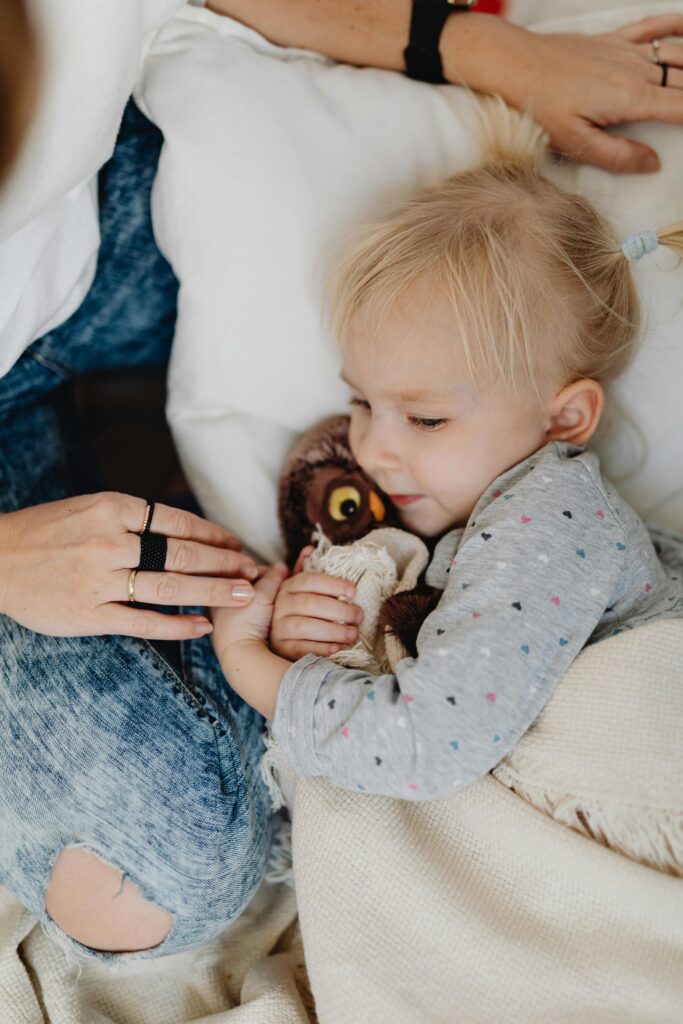
Building the Perfect Bedtime Routine for Your 6-Year-Old
Healthy Sleep Habits That Support Learning, Growth, and Emotional Well-Being
By age six, children are growing in exciting ways. They’re learning to read, solving more complex problems, making new friends, and becoming more independent every day. Behind all of this incredible growth is something many families don’t think about enough—sleep.
Sleep is much more than simply resting after a busy day. While your child sleeps, their brain organizes everything they learned, their body repairs itself, important hormones are released for growth, and emotions from the day are processed. In many ways, bedtime is just as important as healthy meals, physical activity, and school.
According to the American Academy of Sleep Medicine (AASM), children between 6 and 12 years old need 9–12 hours of sleep every night for optimal health (Paruthi et al., 2016). Unfortunately, many school-age children fall short of these recommendations due to busy schedules, extracurricular activities, electronic devices, or inconsistent routines.
The good news is that one simple habit can make a tremendous difference: a consistent bedtime routine.
Why Bedtime Routines Matter
Children thrive on routines because routines help their brains know what to expect. Predictability reduces stress and anxiety while making transitions easier throughout the day.
When your child follows the same bedtime routine every night, their brain begins recognizing familiar cues that signal it is time to wind down. Over time, falling asleep becomes easier, bedtime struggles often decrease, and children begin developing healthy sleep habits that can last a lifetime.
Research has shown that consistent bedtime routines are associated with:
- Better sleep quality
- Falling asleep faster
- Longer sleep duration
- Improved emotional regulation
- Better attention and behavior
- Improved academic performance
- Stronger parent-child relationships (Mindell et al., 2015)
Think of bedtime as preparing your child’s brain and body for tomorrow rather than simply ending today.
What Happens While Your Child Sleeps?
Although your child appears peaceful, their brain is incredibly active during sleep.
During the night:
- Memories from school are organized and stored.
- The brain strengthens learning and problem-solving skills.
- Growth hormone helps bones and muscles develop.
- The immune system fights infections.
- Emotional experiences are processed, helping children better regulate their feelings the following day.
Researchers have found that children who consistently get enough sleep demonstrate stronger attention, memory, creativity, emotional regulation, and executive functioning skills than children who regularly miss sleep (Owens & Weiss, 2017).
Building the Perfect Bedtime Routine
A successful bedtime routine does not have to be complicated. In fact, simple, predictable routines are often the most effective.
Step 1: Keep Bedtime Consistent
Choose a bedtime that allows your child to sleep between 9 and 12 hours before waking for school.
Try to keep bedtime and wake-up times within about 30 minutes every day, including weekends. This consistency helps regulate your child’s internal body clock and makes mornings easier.
Step 2: Begin Winding Down 30–45 Minutes Before Bed
Children often need time to transition from active play to restful sleep.
During this wind-down period:
- Dim the lights.
- Lower household noise.
- Turn off stimulating activities.
- Choose calm family activities.
These changes send important signals to the brain that bedtime is approaching.
Step 3: Turn Off Electronic Devices
Televisions, tablets, phones, and video games emit blue light that can delay the release of melatonin, the hormone that helps us become sleepy.
Experts recommend stopping electronic device use at least one hour before bedtime (American Academy of Pediatrics, 2016).
Instead, consider:
- Reading books together
- Coloring
- Completing puzzles
- Listening to calming music
- Talking about the day
Step 4: Practice Healthy Bedtime Hygiene
Bedtime is an excellent opportunity to build lifelong healthy habits.
A simple routine may include:
- Taking a bath or washing up
- Brushing teeth for two minutes
- Washing hands and face
- Putting on pajamas
- Using the bathroom
Repeating these same steps every night helps children associate these activities with preparing for sleep.
Step 5: Read Together
Reading together before bed is one of the most valuable parts of any bedtime routine.
Reading aloud helps:
- Build vocabulary
- Strengthen reading skills
- Improve listening comprehension
- Encourage imagination
- Strengthen the parent-child relationship
- Promote relaxation before sleep
Even ten to fifteen minutes of reading each evening can make a meaningful difference.
Step 6: Reflect on the Day
Before lights out, spend a few quiet minutes talking together.
Consider asking:
- What was the best part of your day?
- What made you feel proud today?
- Did anything feel difficult?
- What are you excited about tomorrow?
- Who was kind to you today?
- What is something you’re thankful for?
These conversations help children process emotions while strengthening communication and connection.
Step 7: End with Comfort and Consistency
Many children enjoy ending bedtime with familiar family traditions.
Examples include:
- A favorite stuffed animal
- A bedtime song
- A short prayer
- Three slow deep breaths together
- A favorite goodnight phrase
- One last hug and kiss
Simple traditions create comfort, security, and positive associations with bedtime.
Sample 30-Minute Bedtime Routine
| Time | Activity |
|---|---|
| 7:30 PM | Turn off electronics and begin winding down |
| 7:35 PM | Bath or wash up |
| 7:45 PM | Brush teeth and put on pajamas |
| 7:50 PM | Read together |
| 8:05 PM | Talk about the day and practice gratitude |
| 8:10 PM | Lights out |
Remember that every family is different. The goal is consistency rather than perfection.
Common Bedtime Challenges
“My child keeps getting out of bed.”
Remain calm and quietly guide your child back to bed with as little conversation as possible. Consistency teaches expectations over time.
“My child says they aren’t tired.”
Encourage quiet rest in bed with books or soft music instead of allowing stimulating activities.
“My child worries at bedtime.”
Many six-year-olds begin thinking more deeply about school, friendships, and everyday worries.
You can help by:
- Validating their feelings.
- Practicing slow breathing together.
- Keeping a small nightlight if needed.
- Offering reassurance while keeping bedtime calm and predictable.
Signs Your Child May Not Be Getting Enough Sleep
Children who are sleep deprived do not always appear tired.
Instead, they may:
- Become irritable
- Have emotional outbursts
- Struggle to pay attention
- Appear overly active
- Have difficulty remembering information
- Become more accident-prone
- Get sick more often
- Have trouble waking in the morning
If these concerns continue despite healthy sleep habits, speak with your child’s pediatrician.
Family Activity: Create a Bedtime Routine Chart
Invite your child to decorate their own bedtime checklist.
Include each step of the routine:
- Bath or wash up
- Brush teeth
- Pajamas
- Bathroom
- Story time
- Gratitude conversation
- Hugs
- Lights out
Allow your child to place a sticker next to each completed step. Giving children ownership over their bedtime routine often increases cooperation and builds independence.
Conversation Starters
As bedtime becomes a calm and connected part of your evening, try asking:
- What made you smile today?
- What was something new you learned?
- What challenged you today?
- How did you help someone today?
- What are you looking forward to tomorrow?
- What is one kind thing someone did for you today?
These conversations help children strengthen emotional awareness while ending the day feeling heard, supported, and connected.
Final Thoughts
There is no such thing as a perfect bedtime routine, and every family will have evenings that do not go as planned. What matters most is creating a predictable, loving rhythm that helps your child feel safe, secure, and ready for sleep.
A consistent bedtime routine is one of the simplest yet most powerful gifts parents can give. Night after night, small moments like reading a favorite story, sharing a hug, and talking about the day help build healthy sleep habits, strengthen family relationships, improve learning, and support your child’s emotional well-being for years to come.
Video Resources:
English Video:
Spanish Video:
Westchester County Resources
Westchester Library System
Reading together before bed is one of the most effective ways to build literacy while helping children relax before sleep. The Westchester Library System offers free story times, family reading events, literacy programs, and seasonal activities at libraries throughout the county.
Website: https://www.westchesterlibraries.org
Find Your Local Library: https://www.westchesterlibraries.org/about-wls/member-libraries/list-of-member-libraries/
White Plains Public Library
100 Martine Avenue
White Plains, NY 10601
Phone: (914) 422-1400
Website: https://www.whiteplainslibrary.org
Family Services of Westchester
Provides family counseling, children’s mental health services, parenting education, behavioral health programs, and support for families experiencing emotional or behavioral challenges.
106 North Broadway
White Plains, NY 10603
Phone: (914) 937-2320
Website: https://www.fsw.org
Family Ties of Westchester
Offers free parent support groups, family coaching, educational workshops, advocacy services, and connections to community resources for caregivers of children with behavioral, emotional, or developmental needs.
112 East Post Road, 3rd Floor
White Plains, NY 10601
Phone: (914) 995-5238
Website: https://www.familytieswestchester.org
Maria Fareri Children’s Hospital – Pediatric Sleep Medicine
If your child snores frequently, has ongoing difficulty sleeping, sleepwalks, experiences persistent nightmares, or continues to struggle with sleep despite a healthy bedtime routine, your pediatrician may recommend a pediatric sleep evaluation.
222 Westchester Avenue, Suite 300
West Harrison, NY 10604
Phone: (914) 614-4260
Website: https://www.wmchealth.org/location/maria-fareri-childrens-hospital
United Way’s 2-1-1 Hudson Valley
Families looking for parenting programs, mental health services, child care resources, food assistance, financial support, or other community services can contact 2-1-1 Hudson Valley for free, confidential referrals.
Call: 2-1-1 or (800) 899-1479
Text: 898211
Website: https://www.211hudsonvalley.org
References
American Academy of Pediatrics. (2016). Media and Young Minds. Pediatrics, 138(5), e20162591.
Mindell, J. A., Leichman, E. S., DuMond, C., & Sadeh, A. (2015). Sleep and social-emotional development in infants and toddlers. Journal of Clinical Child & Adolescent Psychology, 46(2), 236–246.
Owens, J. A., & Weiss, M. R. (2017). Insufficient sleep in children and adolescents: Causes and consequences. Minerva Pediatrica, 69(4), 326–336.
Paruthi, S., Brooks, L. J., D’Ambrosio, C., et al. (2016). Recommended amount of sleep for pediatric populations: A consensus statement of the American Academy of Sleep Medicine. Journal of Clinical Sleep Medicine, 12(6), 785–786.
Legal Disclaimer: The information provided by our nonprofit is for informational purposes only and not a substitute for professional medical advice, diagnosis, or treatment. Always consult a qualified healthcare provider for medical concerns. We make no guarantees about the accuracy or completeness of the information and are not liable for any decisions made based on it. If you have a medical emergency, call 911 or seek immediate medical care.